

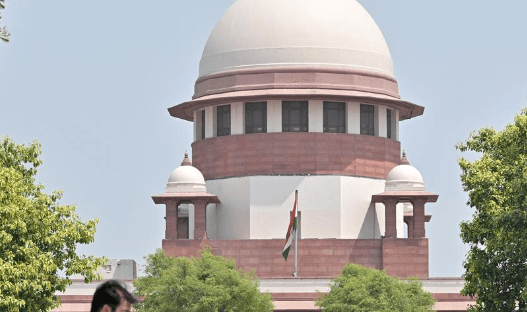
Collegium System in India
Context: Former Supreme Court judge Justice Sanjay Kishan Kaul raised concerns over alleged informal consultations between former CJI D.Y. Chandrachud and the Union Government regarding judicial appointments, renewing debate on collegium transparency and judicial independence.
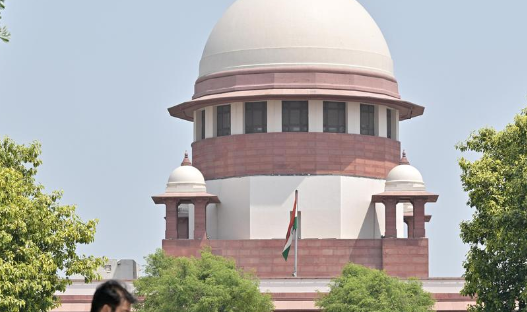
About Collegium System in India:
What it is?
- The Collegium System is a judge-led mechanism for appointing and transferring judges of the Supreme Court and High Courts in India. For Supreme Court appointments, it comprises the Chief Justice of India (CJI) and four senior-most Supreme Court judges.
Constitutional Provisions on Judicial Appointments
- Article 124(2): Mandates that judges of the Supreme Court shall be appointed by the President after consultation with such judges of the Supreme Court and High Courts as the President may deem necessary, always requiring consultation with the Chief Justice of India.
- Article 217(1): Outlines that High Court judges shall be appointed by the President after consultation with the CJI, the Governor of the relevant State, and the Chief Justice of that High Court.
- Framers’ Intent: Designed as an executive-led process balanced by mandatory judicial consultation to evaluate professional competence while preserving checks and balances.
Evolution of the Collegium System:
- First Judges Case (S.P. Gupta v. Union of India, 1981): The Supreme Court held that consultation does not mean concurrence, giving the executive the ultimate primacy in appointments because of its direct accountability to the electorate.
- Second Judges Case (Supreme Court Advocates-on-Record Association v. Union of India, 1993): Reversed the 1981 ruling, interpreting consultation as concurrence and establishing the collegium to shield the bench from political favoritism and ensure judicial primacy.
- Third Judges Case (1998 Advisory Opinion): Expanded the collegium’s structure: the CJI plus the four senior-most judges for Supreme Court elevations, and the CJI plus the two senior-most judges for High Court appointments.
- The Memorandum of Procedure (MoP): Framed in 1998, laying out the procedural steps: the collegium initiates names, the Centre conducts background checks, and the Centre can return recommendations once with reservations.
- If the collegium unanimously reiterates the recommendation, the executive is bound to make the appointment.
- 99th Constitutional Amendment & NJAC Invalidation (2015): Parliament established the six-member National Judicial Appointments Commission. The Supreme Court struck it down in the Fourth Judges Case (2015) for violating the independence of the judiciary as part of the Basic Structure doctrine.
Key Drawbacks and Criticisms of the Collegium System
- Lack of Transparency & Closed Deliberations: Proceedings take place behind closed doors without published minutes, objective selection criteria, or publicly disclosed evaluation matrices.
- Allegations of Nepotism and In-Group Bias: The self-appointing structure faces criticism over favoring relatives, former associates, or direct proteges of sitting and retired judges.
- Erosion of Checks and Balances: Creates a system where the judiciary retains exclusive authority over its own appointments, bypassing legislative scrutiny and diluting executive accountability.
- Stalemate Over the Revised MoP: A revised Memorandum of Procedure—mandated after the 2015 NJAC judgment to improve screening, timelines, and transparency—remains unfinalized due to disagreements between the judiciary and executive over national security vetoes and screening committees.
- Executive Delay Tactics (Pocket Vetoes): Because the executive cannot formally reject reiterated recommendations, it sometimes stalls appointments by sitting on files indefinitely without officially notifying them.
Global Comparative Frameworks:
| Country | Appointing Authority | Screening / Nominating Body | Composition / Mechanism |
| India | President of India | Supreme Court Collegium | Completely closed; consists solely of the CJI and senior-most sitting judges. |
| United States | President of the United States | Executive Nomination / Senate Judiciary Committee | Political checks and balances; presidential nomination subject to public, televised Senate confirmation. |
| United Kingdom | The Crown (on Prime Minister’s advice) | Judicial Appointments Commission (JAC) & UKSC Selection Commission | Independent 15-member body combining judges, legal professionals, and laypersons. |
| South Africa | President of South Africa | Judicial Service Commission (JSC) | Broad-based 23-member commission including the Chief Justice, lawmakers, executive, attorneys, and academics. |
Way Ahead
- Finalize the Revised Memorandum of Procedure (MoP): Implement structured, publicly available criteria for judicial elevation, institutionalize a permanent search-and-evaluation secretariat, and establish reasonable timelines for government responses.
- Introduce Broad-Based Institutional Representation: Explore a revised constitutional appointments model—similar to the UK or South African commissions—incorporating wider legal and academic perspectives.
- Preserve a Judicial Veto Mechanism: Ensure that in any future multi-stakeholder appointments model, the judicial component retains a decisive voice or veto power to safeguard institutional independence from political overreach.
- Formalize Candidate Vetting Standards: Publish clear guidelines regarding minimum reported judgments, tenure benchmarks, and conflict-of-interest declarations to counter claims of ad-hoc preference or nepotism.
Conclusion:
The Collegium System remains central to safeguarding judicial independence, but concerns over transparency, accountability and appointment delays persist. Strengthening the Memorandum of Procedure, introducing objective selection criteria and ensuring timely appointments can enhance institutional credibility. A balanced reform framework must reconcile judicial autonomy with democratic accountability, upholding the Constitution’s Basic Structure.
Critically examine the collegium system as a mechanism for judicial appointments in India. Explain its contribution to judicial independence. Suggest reforms to address its shortcomings.



