Prelims
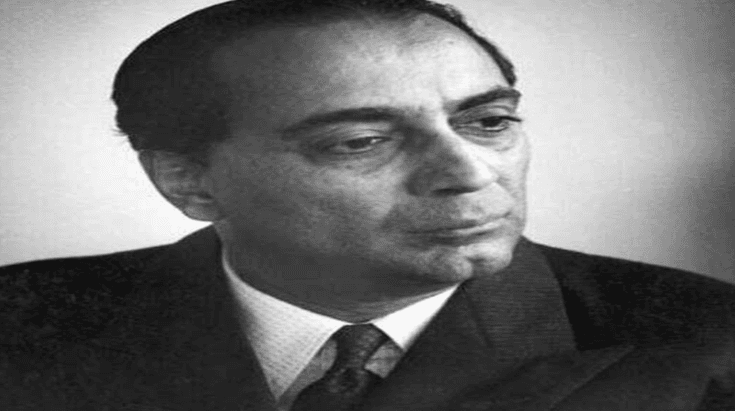
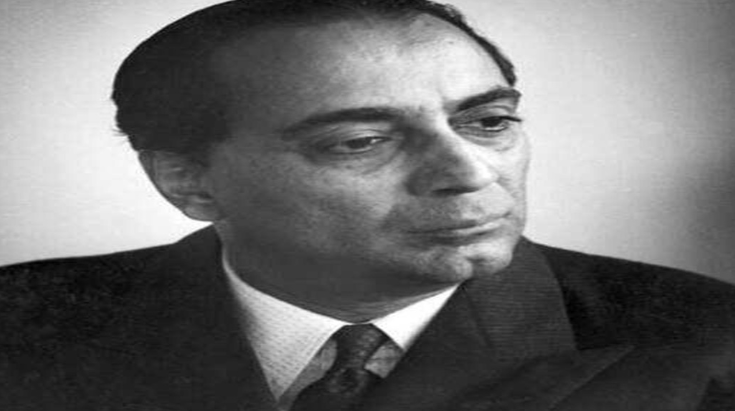
Dr. Homi Jehangir Bhabha
Context: October 30, 2026, marks the 117th birth anniversary of Dr. Homi Jehangir Bhabha, widely revered as the Father of the Indian Nuclear Programme.
About Dr. Homi Jehangir Bhabha:
Who He Was?
- A world-renowned Indian nuclear physicist, institution-builder, and polymath who established the foundational framework for India’s atomic energy architecture, high-energy cosmic ray research, and indigenous nuclear technology.
Early Life & Education:
- Born on October 30, 1909, into a prominent Parsi family in Bombay (Kenilworth House), with maternal family ties to the industrialist Tata family.
- Studied at Elphinstone College and the Royal Institute of Science before proceeding to the University of Cambridge (Gonville and Caius College), completing his mechanical engineering Tripos before switching fully to theoretical physics.
- Earned his doctorate in 1935 under Ralph H. Fowler at the Cavendish Laboratory, collaborating with pioneers like Niels Bohr, Wolfgang Pauli, and Enrico Fermi.
Key Scientific Contributions:
- Bhabha Scattering: Derived the mathematical formula for relativistic electron-positron scattering in quantum electrodynamics, a cornerstone of modern particle physics.
- Cascade Theory of Cosmic Ray Showers: Co-authored a seminal 1937 paper with Walter Heitler detailing how high-energy primary cosmic rays interact with the Earth’s atmosphere to produce electron-photon showers through pair production and bremsstrahlung.
- Meson Theory & Relativistic Time Dilation: Advanced the theoretical understanding of meson decay in flight, offering one of the earliest experimental confirmations of Einstein’s special relativity time dilation.
Key Features:
- Architect of the Three-Stage Nuclear Power Programme: Designed India’s long-term closed fuel cycle strategy (Stage 1: PHWRs using natural uranium; Stage 2: Fast Breeder Reactors using plutonium; Stage 3: Advanced Heavy Water Reactors harnessing vast domestic thorium reserves) to guarantee national energy self-sufficiency.
- Founding Father of Premier Research Temples: Founded the Tata Institute of Fundamental Research (TIFR) in 1945 with Dorabji Tata Trust backing, and set up the Atomic Energy Establishment, Trombay (AEET) in 1954 (renamed the Bhabha Atomic Research Centre [BARC] in his honour in 1967).
- Establishing Executive Governance Architecture: Instrumental in enacting the Atomic Energy Act, 1948; served as the founding Chairman of the Atomic Energy Commission (AEC) and the first Secretary to the Department of Atomic Energy (DAE) in 1954 under Prime Minister Jawaharlal Nehru.
- First Indigenous Research Reactor (Apsara): Spearheaded the commissioning of Apsara in August 1956 at Trombay—Asia’s first nuclear reactor—laying the foundation for self-reliant reactor design, radioisotope production, and nuclear metallurgy.
- Global Leadership & Peaceful Nuclear Advocacy: Presided over the historic first UN Conference on the Peaceful Uses of Atomic Energy in Geneva (1955) and represented India on the Scientific Advisory Committee of the International Atomic Energy Agency (IAEA).