
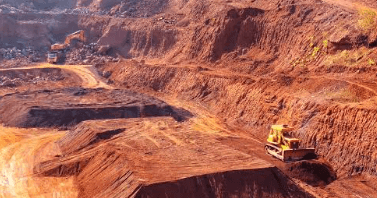
India’s minerals policy needs to move to material security
Context: Experts urged India to strengthen domestic critical mineral processing, refining and recycling under the ₹34,300 crore National Critical Mineral Mission (NCMM) to reduce import dependence and ensure material security.

About India’s minerals policy needs to move to material security:
What Is Material Security?
- The assured, uninterrupted availability of refined, battery-grade, and industrial-grade minerals (such as lithium, cobalt, nickel, and rare earth elements) ready for domestic manufacturing—moving beyond raw ore extraction to encompass beneficiation, chemical refining, circular recycling, and strategic reserves.
Key Policy & Institutional Pillars:
- National Critical Mineral Mission (NCMM): Approved in 2025 with a ₹34,300 crore outlay over seven years to promote mineral exploration, mining, processing, overseas acquisitions and R&D.
- MMDR Act Amendments (2023 & 2025): Empowered the Centre to auction 24 critical mineral blocks and expanded funding for overseas mineral acquisitions and recovery from mining waste.
- Critical Mineral Recycling Incentive Scheme: A ₹1,500 crore scheme (2025–31) supporting mineral recovery from e-waste, used batteries and industrial waste, targeting 400 kilotonnes by 2031.
- Overseas Sourcing via KABIL: Khanij Bidesh India Limited (KABIL) secures overseas mineral resources, including lithium blocks in Argentina, through acquisitions and international partnerships.
Why Auctions Alone Are Insufficient?
- Processing & Refining Bottleneck: Mined raw ore cannot be fed directly into battery or magnet factories; it requires capital-intensive beneficiation and chemical refining, where global capacity is heavily concentrated.
E.g., China’s dominance stems from midstream refining rather than mining alone.
- Long Gestation Timelines of Greenfield Mines: Opening new domestic mines takes years due to environmental clearances, land acquisition, and infrastructure deficits, creating an immediate supply gap for India’s rapidly scaling EV and solar sectors.
- Persistent Import Vulnerability: India still exhibits near-total import dependence for processed lithium, cobalt, nickel, and sintered rare-earth permanent magnets despite holding domestic geological reserves.
Key Challenges to Achieving Material Security:
- Missing Midstream Beneficiation & Refining Ecosystem: India lacks commercial-scale hydrometallurgical and chemical refining plants, risking a scenario where domestically mined ores must be exported abroad for processing before re-import.
E.g., Auctioned lithium and rare-earth blocks facing multi-year delays in commercial supply due to the absence of local refining infrastructure and specialized processing technology.
- Fragmented E-Waste Collection & Quality Standardization: India generated 3.8 million tonnes of e-waste in 2024, but the largely informal scrap sector limits formal recyclers’ access to reliable, quality materials.
E.g., Battery and electronics manufacturers hesitating to procure recycled materials due to inconsistent grade quality and lack of supply-chain traceability.
- Technological Shifts Complicating Strategic Stockpiles: Rapid innovation in battery chemistry alters which minerals are strategically vital, making static stockpiling of raw ores risky and capital-intensive.
E.g., Shifting EV battery preferences between Lithium Iron Phosphate (LFP) and Nickel Manganese Cobalt (NMC) chemistries changing demand for nickel and cobalt versus lithium and graphite.
- Geopolitical Export Restrictions: Heavy global concentration of mining and refining exposes Indian industries to sudden export bans and price volatility.
E.g., Recent export curbs on critical minerals and rare-earth magnets disrupting downstream automotive and clean-energy manufacturing schedules.
Way Ahead:
- Integrate Mining with Processing: Establish Critical Mineral Processing Parks near mining sites and develop refining facilities alongside mineral block auctions to strengthen domestic production.
- Formalise Urban Mining & Recycling: Integrate informal scrap collectors with authorised recyclers through EPR enforcement, digital tracking and BIS certification to ensure quality recycled materials.
- Build Strategic Mineral Reserves: Maintain national stockpiles of refined, industrial-grade critical minerals rather than raw ores, with clear guidelines for storage, rotation and emergency release.
- Focus on Actual Mineral Output: Evaluate the National Critical Mineral Mission (NCMM) based on quantities of refined and recycled minerals supplied to industries, rather than mining blocks auctioned.
- Strengthen Technology & Research Partnerships: Utilise the ₹210 crore ANRF-MAHA Research Programme and partnerships with Australia, Japan and the EU to develop domestic refining and rare-earth technologies.
Conclusion:
India’s policy push under the National Critical Mineral Mission and amended mining laws has laid a strong institutional foundation for securing raw mineral resources. However, true industrial resilience requires bridging the midstream gap between raw block auctions and refined, factory-ready inputs through parallel processing infrastructure, formal e-waste recycling, and smart strategic reserves. Evolving from resource extraction to end-to-end material security will ultimately determine the success of India’s clean energy, EV, and electronics manufacturing ambitions.
How can critical mineral security influence India’s aspirations of becoming a global manufacturing hub? Analyse the major supply-chain risks confronting the country. What should be the key elements of a comprehensive critical minerals strategy?



