Prelims
Sales Tax
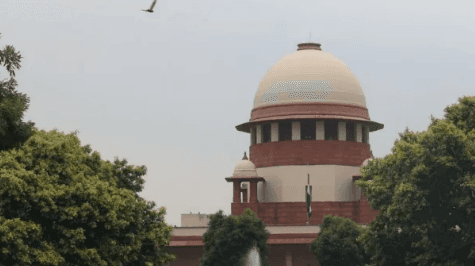
Context: A seven-judge Supreme Court Bench reaffirmed States’ constitutional power to levy additional sales tax or surcharges, closing the three-decade-old Arjun Flour Mills reference.

About Sales Tax:
What it is?
- A single-point or multi-point destination-based indirect tax levied on the sale, purchase, or exchange of specified goods or commodities within a state’s territory, assessed as a percentage of the transaction value or gross turnover.
Background of Sales Tax in India:
- Historical Origin: First introduced in Madras Province in 1938 under C. Rajagopalachari to compensate for excise revenue losses caused by prohibition, later spreading across British Indian provinces.
- Constitutional Basis: Recognised under Entry 54 of the State List, Seventh Schedule, sales tax remained a major source of States’ own-tax revenue for several decades.
- Evolution into VAT and GST: Replaced largely by VAT during 2003–2005 and subsequently by GST in 2017, while States retained taxation powers over specified petroleum products and alcoholic liquor.
Who Can Impose Sales Tax?
- State Legislatures: Under Article 246 and Entry 54 of the State List, States can levy sales tax on specified goods within their territorial jurisdiction.
- Parliament: Under Entry 92A of the Union List and Article 269, Parliament regulates taxation of interstate sales, historically governed by the Central Sales Tax Act, 1956.
Key Features of Sales Tax:
- Indirect Taxation: Legally imposed on dealers or registered sellers, sales tax is generally passed on to consumers through product prices, making its economic burden indirect.
- Turnover-Based Liability: Tax liability depends on sales turnover rather than business profitability, meaning dealers may owe sales tax even when their businesses incur financial losses.
- Exemptions and Differential Rates: States historically prescribed different tax rates across commodity categories, granting exemptions for essential goods while imposing higher rates on selected luxury products.
- Taxable Sale Transaction: Sales tax arises upon the sale or purchase of goods, generally involving transfer of ownership for consideration, rather than merely holding or producing goods.
- Surcharge and Additional Levies: States could impose additional sales tax or surcharges through legislation, effectively increasing tax liability for dealers meeting prescribed turnover thresholds.
The Legal Issue: Tax on Tax Controversy
- Disputed Surcharge: States such as Odisha and Punjab imposed additional levies of approximately 10–15% on existing sales tax, particularly targeting dealers exceeding specified turnover thresholds.
- Constitutional Objection: Dealers argued that taxing an existing tax exceeded Entry 54 of the State List and resembled income taxation reserved for Parliament under Entry 82.
Settled Constitutional Doctrine:
- Substance Over Calculation: The method of calculating a surcharge does not change its legal character. A 10% surcharge on 10% sales tax effectively equals 1% additional tax on turnover.
- Turnover Versus Income: Since sales tax liability arises from taxable transactions rather than net profits, additional sales tax cannot be classified as income tax under Entry 82.
- Resolution of Precedential Conflict: The MADA judgment (2024) clarified that mineral royalty is not a tax, overruling the relevant India Cement position and removing the perceived conflict with S. Kodar.