

Prelims
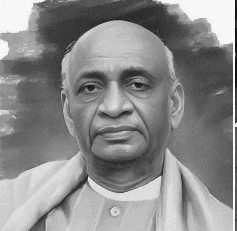
Sardar Vallabhbhai Patel
Context: On October 31, 2026, India observed the 151st birth anniversary of Sardar Vallabhbhai Patel as Rashtriya Ekta Diwas (National Unity Day), highlighted by national tributes at the Statue of Unity in Ekta Nagar, Gujarat.
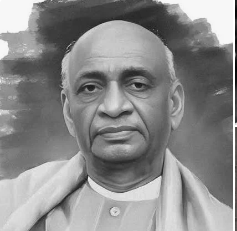
About Sardar Vallabhbhai Patel:
Who He Was?
- A preeminent founding father of the Republic of India, nationalist statesman, barrister, and freedom fighter who served as independent India’s first Deputy Prime Minister and Home Minister. Renowned as the Iron Man of India and the Bismarck of India, he led the political and territorial consolidation of over 560 princely states into the Indian Union and established the modern All India Services.
Early Days:
- Born on October 31, 1875, in Nadiad, Gujarat, to Jhaverbhai Patel and Ladba Patel into a peasant family.
- After passing the district pleader examination, he established a thriving law practice in Godhra and Borsad before travelling to England to study at the Middle Temple in London.
- Completed the bar course in 30 months, topping his class, and returned to Ahmedabad as a prominent criminal defense barrister.
Contributions to the Indian Freedom Struggle:
- Kheda Satyagraha (1918): Joined Mahatma Gandhi as his Up-Senapati (deputy commander), abandoning his lucrative legal career to organize peasants against harsh British land revenue assessments during widespread crop failure, securing relief for poor cultivators.
- Non-Cooperation Movement & Khadi Nagar (1920–1921): Mobilized Gujarat under the Non-Cooperation Movement, raised over ₹10 lakh for the Tilak Swaraj Fund, and organized the 1921 Ahmedabad Congress Session in a temporary tent city (Khadi Nagar) woven entirely from domestic khadi cloth.
- Nagpur Flag Satyagraha & Borsad Struggle (1923): Led the national Flag Satyagraha in Nagpur following the arrest of flag-bearers, successfully compelling the colonial administration to permit the display of the National Flag, and subsequently forced the withdrawal of punitive police taxes in Borsad.
- Bardoli Satyagraha (1928): Led a no-tax campaign against a steep 22% land revenue hike in Bardoli, Gujarat. His organizational discipline forced the colonial government to roll back the tax increase and restore seized properties; the peasant collective and women of Bardoli bestowed upon him the title of Sardar (leader/chief).
- Karachi Congress Presidency (1931): Presided over the Karachi Session of the Indian National Congress, guiding the adoption of resolutions on Fundamental Rights and the National Economic Programme.
- Quit India Movement (1942–1945): Delivered impassioned public appeals in Bombay backing the Quit India Resolution; was arrested alongside the Congress Working Committee and imprisoned at Ahmednagar Fort until 1945.
- Integration of Princely States (1947–1950): As Minister of States and Deputy Prime Minister, partnered with V. P. Menon to integrate over 560 semi-autonomous princely states using diplomatic statecraft, Instruments of Accession, and decisive actions in Junagadh, Hyderabad (Operation Polo), and Kashmir.
Key Associations & Positions:
- Indian National Congress (INC): President of the Gujarat Provincial Congress Committee (1920); President of the Karachi Congress (1931); Chairman of the Congress Parliamentary Sub-Committee (1937) overseeing provincial governance.
- Ahmedabad Municipality: Served as Sanitation Commissioner (1917) and Municipal President (1924–1928), transforming civic infrastructure, town planning, and public health.
- Constituent Assembly of India: Chaired the Advisory Committee on Fundamental Rights, Minorities and Tribal and Excluded Areas and the Provincial Constitution Committee.
- All India Services: Championed the retention and modernization of administrative services as the constitutional steel frame of India, establishing the Indian Administrative Service (IAS) and Indian Police Service (IPS) to replace the colonial ICS and IP.
Last Days:
- In late 1950, Patel’s health deteriorated significantly due to prolonged cardiac illness and chronic intestinal ailments exacerbated by years of colonial imprisonment and the strain of partition administration.
- He was flown from New Delhi to Bombay to recuperate at Birla House.
- Suffered a massive heart attack and passed away on December 15, 1950, at the age of 75. Posthumously awarded India’s highest civilian honour, the Bharat Ratna, in 1991.



