
State of the Cryosphere 2026: The Cost of Overshoot
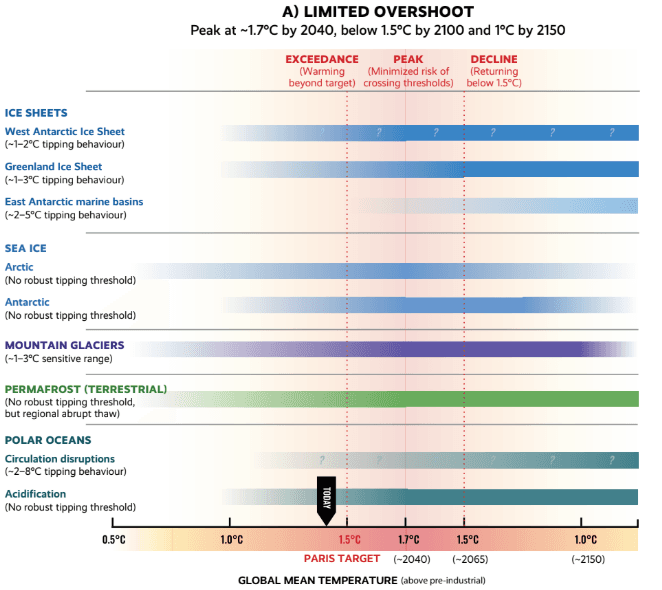
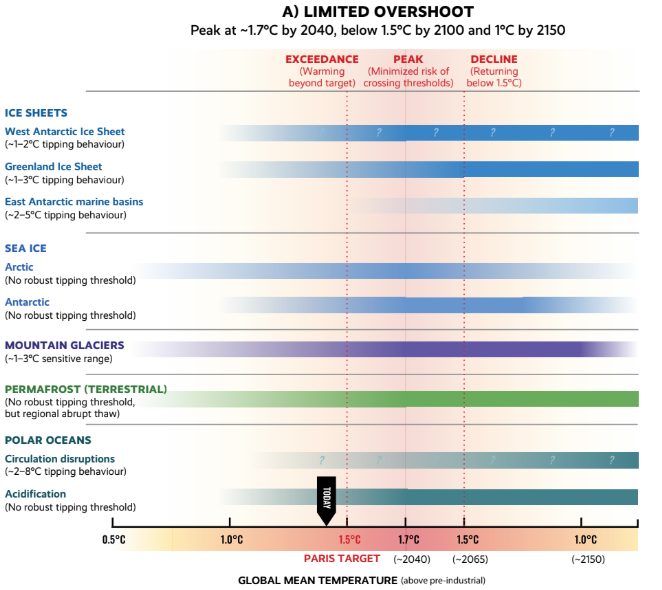
Context: Ahead of COP31 in Antalya, Turkey, the International Cryosphere Climate Initiative (ICCI) and UNEP released two landmark reports—State of the Cryosphere 2026: The Cost of Overshoot and Overshoot and the Cryosphere: Averting Global Meltdown—warning that temporarily exceeding the 1.5°C threshold risks irreversible ice sheet loss and catastrophic permafrost carbon release.
About State of the Cryosphere 2026: The Cost of Overshoot
What it is?
- The cryosphere encompasses all regions of the Earth’s surface where water exists in frozen, solid form—including continental ice sheets (Greenland and Antarctica), mountain glaciers, seasonal snow cover, sea ice, lake/river ice, and terrestrial or submarine permafrost.
- Operating as Earth’s primary thermal regulator, it reflects incoming solar radiation via high albedo and acts as the planet’s vast fresh-water and carbon sink.
Key Findings of the Report:
- Arctic & Himalayan Temperature Amplification: The Arctic is warming four times faster than the global average, while the Hindu Kush Himalayas experience amplified warming of 1.8°C–2.2°C per 1.5°C global rise.
- Massive Permafrost Carbon Reserves: Covering approximately 14 million sq. km, terrestrial permafrost stores 1,700 billion tonnes of carbon, posing major climate risks if thawing releases greenhouse gases.
- Accelerating Polar Ice Sheet Loss: Greenland and Antarctic ice sheets are reportedly losing ice six times faster than in the 1990s, increasing long-term sea-level rise risks.
- High-Overshoot Climate Thresholds: Under 2.8°C–3.2°C warming scenarios, sea-level rise could reach 5 cm annually by 2150, exceeding coastal wetlands’ natural adaptation capacity.
- Extreme Mountain Glacier Depletion: A 3°C warming scenario could eliminate most mid-latitude glaciers below 6,000 metres and destroy two-thirds of Hindu Kush Himalayan glacier ice.
- Surging Permafrost Emissions: Rapid thaw through thermokarst erosion, slope failures and thaw lakes could release emissions comparable to current annual US emissions for 100–200 years.
- Arctic Sea Ice Loss & AMOC Collapse: Prolonged ice-free Arctic summers and potential AMOC disruption under high warming could severely alter Atlantic circulation and European temperatures.
- India’s High GLOF Mortality: Between 1835 and 2025, India reportedly recorded 6,119 deaths across 62 GLOFs, with ice avalanches and monsoon rainfall identified as major triggers.
Reasons for the Decline in Cryosphere:
- Elevated Greenhouse Gas Forcing & Temperature Overshoot: Relentless anthropogenic greenhouse gas emissions driving atmospheric concentrations past 420 ppm accelerate surface melting across polar and alpine zones.
Example: The Greenland Ice Sheet threshold for long-term irreversible melt is projected to be triggered well below 2°C, near 1.5°C.
- Cryosphere-Albedo Feedback Loops: The retreat of highly reflective snow and sea ice uncovers darker oceanic waters and rocky terrain, absorbing more shortwave solar radiation and exponentially amplifying local warming.
Example: The Arctic amplification phenomenon where absence of summer sea ice warms adjacent ocean layers and accelerates Siberian permafrost thaw.
- Sub-Surface Ocean Thermal Forcing: Intrusion of deep, warm oceanic currents beneath floating ice shelves weakens protective buttresses from below.
Example: Thermal erosion destabilizing the West Antarctic grounding lines and coastal glaciers.
- Cascading Hydro-Climatic Extremes & Wildfires: Increased occurrence of high-altitude rain-on-snow events and boreal wildfires burns insulating organic soil layers, accelerating deep subterranean permafrost thaw.
Example: Rising summer monsoonal deluges and ice avalanches in the Himalayas triggering rapid supraglacial lake expansions and sudden dam collapses.
Implications of Cryosphere Decline:
- Destabilization of Global Sea Levels: Melting polar sheets place coastal megacities and river deltas at risk of chronic inundation, erosion, and extreme storm surge damage as sea-level rise outpaces nature-based adaptation.
- Severe Freshwater and Food Insecurity: Upstream glacial retreat disrupts dry-season baseflows for major transboundary river basins (Indus, Ganga, Brahmaputra), leading to severe summer droughts, diminished crop yields, and acute downstream water stress.
- Escalating Downstream Hazards (GLOFs & Landslides): Expanding glacial lakes behind fragile moraines heighten the risk of catastrophic outburst floods that wipe out downstream hydropower dams, communication networks, and human settlements.
- Unstoppable Carbon and Methane Feedback: Thawing permafrost awakens ancient microbial decomposition, transforming the Arctic from a global carbon sink into a self-sustaining net greenhouse gas source for centuries.
- Disruption of Planetary Ocean Conveyors: Massive freshwater influxes from melting Arctic and Greenland ice freshen North Atlantic surface waters, slowing the AMOC and disrupting global monsoon dynamics and marine ecosystems.
Recommendations:
- Enforce Strict Limits on 1.5°C Exceedance: National commitments ahead of COP31 must mandate rapid fossil fuel phase-outs to ensure peak warming remains capped near 1.7°C for no more than two decades, achieving global net-zero by 2050 to bring temperatures below 1.0°C by 2150.
- Scale-Up Sustainable Carbon Drawdown: Combine emissions cuts with large-scale ecological and engineered carbon dioxide removal (CDR) to pull atmospheric concentrations down toward 350–380 ppm.
- Implement Early Warning & Structural GLOF Mitigation: Deploy automated hydrological water-level sensors, lake siphoning systems, and satellite InSAR monitoring across vulnerable high-risk glacial lakes in the Hindu Kush Himalayas to protect downstream communities.
- Expand International Cryosphere Adaptation Finance: Mobilize targeted loss-and-damage climate financing directed specifically toward vulnerable mountain downstream communities and indigenous Arctic populations to reinforce physical infrastructure and build regional resilience.
Conclusion:
Limiting peak warming as close to 1.5°C as possible and transitioning rapidly away from fossil fuels represents the only viable pathway to prevent cascading planetary tipping points. For India and the broader Himalayan region, integrating proactive glacier hazard monitoring with scaled-up adaptation finance is no longer optional, but an urgent survival imperative.
What do you understand by cryosphere. Discuss how it affects the earth’s climate.(250 words)



