The India–RoKN Bilateral Exercise
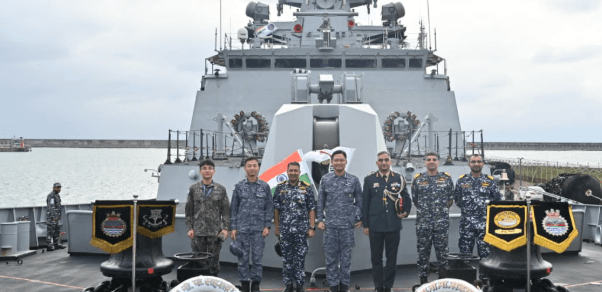
Context: Indian Naval Ship (INS) Sahyadri, an indigenously designed and built guided-missile stealth frigate, arrived at Busan Naval Harbour in South Korea, to participate in the India–Republic of Korea Navy (IN-RoKN) Bilateral Maritime Exercise.

About The India–RoKN Bilateral Exercise:
What it is?
- A bilateral maritime military exercise conducted between the Indian Navy (IN) and the Republic of Korea Navy (RoKN), featuring both harbor interactions and tactical maneuvers at sea to enhance joint operational coordination.
Host: Republic of Korea (South Korea), with the harbor phase staged at the Busan Naval Base followed by coordinated operations in adjacent waters.
Member Nations: India and Republic of Korea.
Aim: To deepen bilateral naval cooperation, foster professional camaraderie, share operational best practices, and enhance tactical interoperability to support a free, open, and rules-based maritime order in the Indo-Pacific.
Key Features of the Exercise:
- Two-Phase Operational Structure: Divided into an initial Harbor Phase at Busan (focused on planning conferences, cross-deck visits, sports fixtures, and subject matter exchanges) and an intensive Sea Phase.
- Advanced Tactical Sea Drills: Features coordinated live-action maneuvers at sea between INS Sahyadri and ROKS Munmu the Great, including tactical formation steaming, cross-deck helicopter operations, and seamanship evolutions.
- Professional and Operational Knowledge Sharing: Provides an institutional forum for personnel from both navies to exchange technical expertise, damage control protocols, and maritime domain awareness (MDA) procedures.
- Deployment of Indigenous Naval Engineering: Showcases India’s indigenous warship-building capabilities through the long-range forward deployment of the Mazagon Dock-built stealth frigate INS Sahyadri in East Asian waters.
Significance:
- Expands India’s naval presence in East Asia, reinforcing the Act East Policy and SAGAR doctrine through deeper maritime security cooperation.
- Strengthens bilateral defence cooperation, naval interoperability and operational trust, safeguarding vital Sea Lines of Communication (SLOCs) in the Indo-Pacific.