
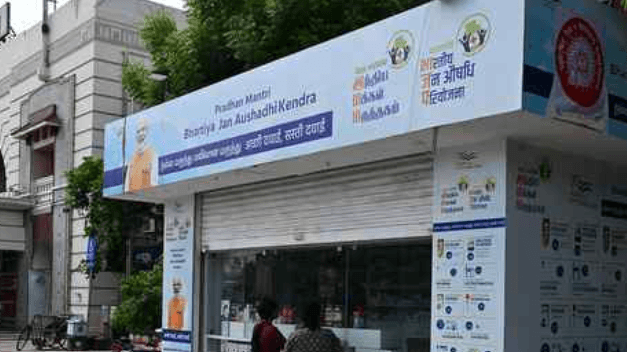
The need to expand Jan Aushadhi
Context: Despite expanding to 20,547 outlets and generating ₹9,000 crore in annual savings (FY 2025–26), PMBJP faces limited retail reach and persistent out-of-pocket healthcare costs.

About The need to expand Jan Aushadhi:
What It Is?
- A flagship healthcare initiative originally launched in 2008 and revamped in 2015—implemented by the Pharmaceuticals & Medical Devices Bureau of India (PMBI) under the Department of Pharmaceuticals—to make quality generic medicines and surgical items available at affordable prices through dedicated retail outlets (Jan Aushadhi Kendras).
Key Data & Coverage Stats:
- Product Basket: Covers 2,110 generic medicines and 315 surgical and medical consumables across major therapeutic categories.
- Retail Footprint: Expanded to 20,547 Jan Aushadhi Kendras as of July 2026 (up from 17,990 in December 2025), progressing toward a target of 25,000 outlets by March 2027.
- Daily Footfall & Sales: Serves roughly 10–12 lakh visitors daily, recording retail sales worth ₹2,252 crore in FY 2025–26.
- Household Financial Relief: Delivers medicines at an average discount of ~80% compared to branded equivalents, saving citizens approximately ₹9,000 crore in FY 2025–26 and ₹45,000 crore over 12 years.
- Quality Benchmark: Sources exclusively from WHO-GMP certified suppliers with mandatory batch testing, reporting a substandard drug rate of 0.34% compared to 3.70% in the open retail market.
Need for Expanding Jan Aushadhi:
- Reducing Out-of-Pocket Expenditure (OOPE): Medicines account for 60–70% of household OOPE in India, while schemes like PM-JAY largely exclude routine outpatient drug expenses, necessitating affordable generics.
- Addressing Low Public Health Spending: Government health expenditure stands at 1.43% of GDP (2023–24) against the 2.5% policy target, making affordable generic medicines crucial for financial protection.
- Bridging Retail Coverage Gaps: Despite 20,547 Jan Aushadhi Kendras, their number equals only 1.7% of India’s 12 lakh private pharmacies, highlighting inadequate rural and semi-urban coverage.
- Ensuring Universal Access: Encouraging customers across income groups increases footfalls, inventory turnover and economies of scale, improving affordability and financial sustainability of Jan Aushadhi Kendras.
Challenges Hindering Wider Adoption:
- Physician Resistance to Generics: Doctors’ concerns over drug quality and prescribing autonomy have hindered generic prescriptions, with the NMC’s generic-prescribing directive placed on hold.
E.g., A Port Blair outpatient study found that only 6% of patients had requested generic medicines from their doctors, reflecting limited patient demand.
- Low Awareness & Social Stigma: Limited publicity and poorly located outlets reinforce the misconception that Jan Aushadhi Kendras serve only economically weaker sections, restricting wider adoption.
E.g., A Port Blair survey found only one-third of outpatients knew about the scheme, while over half lacked awareness of available products.
- Medicine Stockouts & Supply Gaps: Frequent shortages of essential medicines, particularly for chronic diseases, undermine patient confidence, repeat visits and pharmacy viability.
E.g., Patients unable to obtain all prescribed medicines at a Kendra often return to private pharmacies, reducing trust in affordable generic outlets.
- Limited Quality-Testing Transparency: Despite a reported 0.34% substandard medicine rate, inadequate public disclosure of testing methods, timelines and laboratory reports sustains physician and consumer scepticism.
Way Ahead:
- Conduct Nationwide Baseline Surveys: Engage independent institutions to assess public awareness, prescribing practices and medicine availability, enabling evidence-based expansion and targeted interventions.
- Ensure Transparent Quality Testing: Publish IPC batch-testing reports, laboratory details and bioequivalence information to strengthen confidence among doctors and consumers in generic medicines.
- Introduce Real-Time Inventory Monitoring: Upgrade the Jan Aushadhi Sugam app with live stock availability and automated replenishment to minimise shortages and improve accessibility.
- Promote Universal Smart-Value Pharmacies: Launch nationwide awareness campaigns presenting Jan Aushadhi as affordable, quality healthcare for everyone, supported by dedicated public funding.
Conclusion:
The Pradhan Mantri Bhartiya Janaushadhi Pariyojana has demonstrated its ability to slash household medicine bills by up to 80%, leveraging India’s global strength in generic pharmaceutical manufacturing. However, translating this success into nationwide relief requires overcoming physician skepticism, supply-chain stockouts, and limited retail visibility. Combining transparent quality disclosures, real-time digital stock tracking, and universal public outreach will enable Jan Aushadhi to dramatically reduce India’s out-of-pocket healthcare burden.
“The persistence of child malnutrition in India reflects failures extending beyond household food insecurity.” Identify the major non-food determinants of child malnutrition.



