
The State of World Population Report (SOWP) 2026
Context: The United Nations Population Fund (UNFPA) released its annual flagship State of World Population Report (SOWP) 2026, titled “Succeeding Generations: Empowering young people to chart the future,” in New Delhi.

About The State of World Population Report (SOWP) 2026:
What It Is?
- An annual flagship publication examining global demographic trends, human rights, and sexual and reproductive health; the 2026 edition evaluates youth aspirations around relationships, parenthood, and life milestones through the Demographic Futures Survey and consultations with over 300 youth leaders across 40+ countries.
Publishing Organisation: Released by the United Nations Population Fund (UNFPA).
Key Findings: Global Population Trends
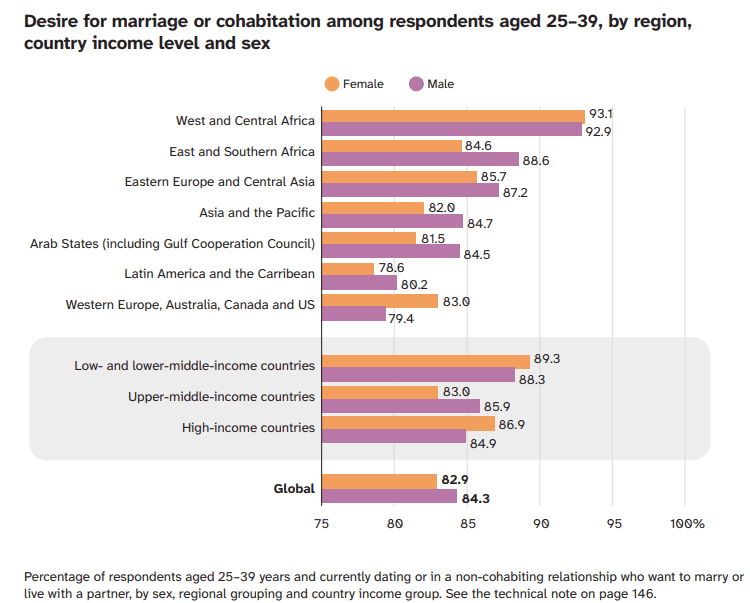
- Delayed Milestones Despite Family Aspirations: 70% of adults aged 18–39 view marriage as ideal and over 90% want children, yet economic barriers delay independent living to ages 25–29 and partnering to 30–34.
- Financial & Housing Barriers: 72% cite economic and housing constraints as major obstacles to having children; 88% identify financial security and 87% cite stable employment as key preconditions.
- Optimism Drives Fertility Intentions: Two-thirds of respondents feel optimistic about the future, with the most optimistic adults intending to have 0.42 more children (16% higher) than the most pessimistic.
- Youth Exclusion & NEET Disparities: 1 in 5 youth globally are Not in Employment, Education, or Training (NEET)—climbing to 27% for young women (vs. 13% for men) and 49% for youth with disabilities.
- Severe Political Underrepresentation: Adults aged 18–30 make up 19% of the global population but hold only 2.8% of parliamentary seats; 76% of youth under 30 feel unheard by politicians.
- Adolescent Mental Health & Conflict Exposure: Mental health accounts for 19% of the adolescent disease burden globally, while youth (10–24) living within 50 km of active conflict more than doubled to 340 million.
- Declining Youth Development Aid: Official Development Assistance (ODA) from DAC nations dropped by a record 23% in 2025 to $174.3 billion, threatening health and education programs in low- and middle-income countries where 90% of adolescents live.
Key Findings: India Population Trends (SOWP 2026 & NFHS-6)
- Demographic Dividend Window: Over 1 in 4 Indians are aged 10–24, creating a time-bound window where young workers support relatively few dependents.
- Replacement-Level Fertility with State Gaps: India’s Total Fertility Rate (TFR) is 2.0 births per woman, ranging from 1.0 in Sikkim to 2.7 in Bihar.
- Optimism Amid Economic Anxiety: 83% of Indian respondents feel positive about the future, despite 47% expressing concern over conflict, economic insecurity, and inequality.
- Ideal vs. Actual Family Size: Indian women aged 18–39 desire an average of 2.1 children, yet women aged 35–39 average just 1.0 child—and nearly 85% of childless respondents aged 35–39 still want children.
- Maternal Health & UHC Progress: Maternal Mortality Ratio (MMR) fell to 87 per 100,000 live births (SRS 2022–24), skilled birth attendance reached 91.3%, and the UHC service coverage index hit 69/100.
- Family Planning & Digital Divide: Unmet need for family planning dropped to 8.5% (ranging from 4.4% in Andhra Pradesh to 21.0% in Meghalaya), traditional contraceptive use rose to 16.4% as modern methods dipped to 52.7%, and 64% of women own a mobile phone (77.6% urban vs. 57.4% rural).
Core Challenges Highlighted:
- Education-to-Work Disconnect & Gig Precarity: Higher education no longer guarantees secure jobs, trapping youth in AI-vulnerable, informal, or gig roles without social protection.
E.g., platform workers in the Philippines losing sudden income during typhoons without sick pay or insurance.
- Tech-Facilitated Gender-Based Violence (TFGBV): Unregulated digital spaces and generative AI amplify deepfakes, harassment, and misogynistic narratives while families restrict women’s online presence.
E.g., in India, 22.3% of women reported past-year intimate partner violence, and women’s social media is routinely policed over reputational fears.
- Constrained Bodily Autonomy & Counselling Gaps: 44% of partnered women across 78 countries lack full bodily autonomy, while poor counselling fuels reliance on less effective contraception.
E.g., India’s shift toward traditional methods from 10.3% to 16.4% alongside falling modern method use from 56.4% to 52.7%.
- Tokenistic Participation & Intergenerational Moral Hazard: Older leaders dominate parliaments and boards, enacting short-term climate and fiscal policies that burden youth.
E.g., 68% of global parliamentarians are over 45, and 77% of young politicians report being publicly celebrated while excluded from real decisions.
Key Recommendations:
- Future-Fit Education & Labour Protections: Mandate paid internships/apprenticeships, teach AI and green-economy skills, and extend binding labour rights and social security to gig and informal workers.
- Universal, Youth-Responsive Healthcare: Integrate mental health, menstrual hygiene, sexuality education, and non-judgmental reproductive care—including expanded modern options like DMPA-SC and single-rod implants in India—into primary care under UHC.
- Binding Youth Power & Participatory Budgeting: Replace token consultations with voting youth quotas, participatory budgeting, intergenerational equity assessments, and at least 20% youth representation in national COP delegations.
- Digital Safety, Privacy & Positive Masculinity: Mandate platform accountability for online abuse, ban non-consensual data harvesting, fund community fact-checking, and positively engage men and boys in digital spaces and caregiving.
- Sustained Multi-Year Youth Financing: Reverse cuts to adolescent development aid and provide predictable, direct multi-year funding to grassroots and youth-led groups, prioritizing girls and youth with disabilities.
Conclusion:
UNFPA’s State of World Population 2026 shows that young people are not rejecting family, work, or civic life—they are blocked by economic precarity, institutional exclusion, and health and digital safety gaps. For India, capturing its demographic dividend requires converting maternal and educational gains into decent jobs, expanded contraceptive choice, and safe digital access across every state, shifting from designing policies for youth to co-creating systems with them.
Identify the major geographical and socio-economic determinants of population density in India. Explain the persistence of sharp interregional variations. Assess their implications for infrastructure and resource planning.



