

Prelims
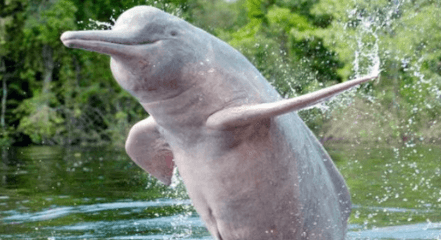
UNEP honors India’s Ganges Dolphin recovery
Context: The United Nations Environment Programme (UNEP) report, “Nature’s Comeback – Scaling Ecosystem Restoration for People and Planet,” recognized India’s Ganges River dolphin species recovery program as one of 35 UN World Restoration Flagships.

About India’s Ganges Dolphin:
What it is?
- An obligate freshwater cetacean (popularly called Susu for the sound it makes while breathing) that serves as India’s National Aquatic Animal and the state aquatic animal of Assam. It is designated as Endangered on the IUCN Red List, placed under Schedule I of the Wildlife (Protection) Act, 1972, and listed in Appendix I of CITES.
Habitat:
- Restricted to deep-water pools, river bends, and confluence zones across the freshwater reaches of the Ganges–Brahmaputra–Meghna and Karnaphuli–Sangu river systems spanning India, Nepal, and Bangladesh.
Key Characteristics:
- Ultrasonic Echolocation (Functionally Blind): The Ganges River dolphin has poorly developed eyesight and relies on ultrasonic clicks and echoes to navigate, locate prey and detect obstacles in turbid waters.
- Indicator of Riverine Health: As a flagship freshwater species, its presence indicates suitable river habitats, adequate water availability and prey diversity, reflecting broader river ecosystem health.
- Side-Swimming Locomotion: Its flexible neck, broad flippers and elongated snout facilitate sideways swimming near riverbeds, helping detect and capture bottom-dwelling fish and crustaceans.
- Surface-Breathing Pattern: Being an air-breathing mammal, it periodically surfaces, typically every 30–120 seconds, to inhale atmospheric oxygen through a blowhole atop its head.
Ganges Dolphin Recovery Program:
- Comprehensive Action Plan (2022–2047): Implemented under the aegis of the Ministry of Environment, Forest and Climate Change (MoEFCC) and Project Dolphin to chart a 25-year institutional conservation and habitat protection blueprint.
- UN World Restoration Flagship Recognition: Formally integrated into the UN Decade on Ecosystem Restoration (co-led by UNEP and FAO) as an exemplary large-scale model for reviving degraded freshwater biodiversity hotspots.
- Community-Led Conservation & Green Jobs: Engages riverside fishing communities, local youth, and Ganga Praharis in surveillance, eco-tourism guiding, and rescue operations, creating sustainable livelihoods and reducing accidental gill-net entanglements.
- In-Situ River Rejuvenation Synergy: Operates in direct synergy with the National Mission for Clean Ganga, focusing on maintaining environmental flows, abating industrial discharge, removing physical barriers, and safeguarding designated sanctuaries such as the Vikramshila Gangetic Dolphin Sanctuary.



