
GalaxEye Orders Electric Propulsion Systems for 30 Satellites

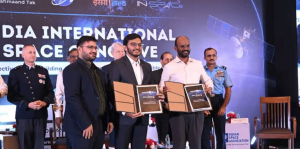
Bengaluru-based space start-up GalaxEye awarded Bellatrix Aerospace a multi-year contract for propulsion systems for 30 upcoming OptoSAR Gen-II satellites. Announced on 24 November 2026, the order is India’s largest business-to-business order by satellite volume between two private space companies since the sector opened to private participation in 2020.
Satellite propulsion and testing
Bellatrix will design, build, test and deliver its Arka Hall-effect electric propulsion systems under a phased schedule. The thrusters will position satellites in orbit, maintain spacing within the constellation, help avoid space debris and enable controlled deorbiting at the end of their operational lives.
GalaxEye launched Mission Drishti aboard a SpaceX Falcon 9 on 3 May 2026; it became the world’s first OptoSAR satellite in orbit. OptoSAR combines optical imaging and synthetic aperture radar, enabling imaging through clouds, smoke and darkness.
Bellatrix’s Arka electric and Rudra green-propellant thrusters completed in-orbit qualification on ISRO’s PSLV-C58 POEM-3 in January 2024. Rudra underwent further testing on POEM-4 in January 2025.
Funding and development
Bellatrix is expanding manufacturing after raising $20 million in a pre-Series B round led by Cactus Partners in March 2026. In September 2026, the Technology Development Board committed ₹63.84 crore from the government’s Research, Development and Innovation Fund to GalaxEye’s next-generation multisensor satellite project, whose approved cost is ₹247.69 crore.
Important Facts for Exams
- Thruster operation: A Hall-effect thruster uses a magnetic field to restrict electron motion; the electrons ionise propellant, whose ions are accelerated to generate thrust.
- Electric-drive trade-off: Electric propulsion’s high specific impulse suits satellite station-keeping, but its low thrust means engines generally run for long periods to deliver mission impulse.
- Orbital geometry: Constellations often use satellites with similar orbits, eccentricities and inclinations, so perturbations affect them similarly and help preserve their geometry with less station-keeping fuel.
Daily Current Affairs Main Hub
Explore today's headlines, topic-wise GK quizzes, and past archives on our permanent pillar page.