
Prelims
Cyclone Murasu
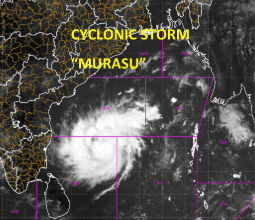
Context: A deep depression over the Bay of Bengal intensified into Severe Cyclonic Storm ‘Murasu’, tracking northwestwards with sustained winds of 100–110 kmph.

About Cyclone Murasu:
What it is?
- A Severe Cyclonic Storm (SCS) that developed in the Westcentral and adjoining Southwest Bay of Bengal during the active Northeast Monsoon season.
- Under IMD classification, a severe cyclonic storm sustains surface wind speeds between 48 to 63 knots (89 to 117 kmph), accompanied by gale-force winds, intense storm surges, and torrential precipitation.
Naming Convention:
- Contributing Country: Suggested by India under the comprehensive tropical cyclone naming registry adopted in 2020 by the WMO/ESCAP Panel on Tropical Cyclones (PTC).
- Etymology & Meaning: Derived from Tamil, meaning a traditional war drum or percussion instrument.
- Sequential Queue: Assigned sequentially following Cyclone Arnab (contributed by Bangladesh), to be followed in the panel’s rotational roster by Akvan (contributed by Iran).
IMD Cyclone Alert & Warning Colour Codes:
The India Meteorological Department operates a standardized four-stage weather warning system utilizing color-coded advisories to communicate operational urgency to disaster management authorities:
- Pre-Cyclone Watch (Green / Yellow Message): Issued at least 72 hours in advance when a low-pressure area or depression forms, signalling early monitoring of coastal sectors likely to experience adverse weather.
- Cyclone Alert (Yellow Message): Issued at least 48 hours prior to the anticipated commencement of adverse weather, advising authorities and the public to “Be Updated / Be Aware” as the storm track firms up.
- Cyclone Warning (Orange Message): Dispatched at least 24 hours in advance, signalling “Be Prepared / Stay Alert.” Detailed landfall projections, expected wind damage, and localized storm surge heights are specified to initiate evacuation logistics.
- Post-Landfall Outlook / Landfall Alert (Red Message): Issued at least 12 hours before landfall, denoting “Take Action / Danger.” It mandates emergency sheltering, suspension of port/marine traffic, suspension of rail/road transit, and active deployment of disaster response forces.
Significance:
- Arriving shortly after Cyclone Arnab, the cyclone intensifies flood risks, agricultural losses and drainage problems across already saturated coastal Andhra Pradesh and Tamil Nadu.
- Tests SDRF/NDRF response, Mana Mitra digital helplines and interstate power restoration coordination, highlighting the resilience of emergency systems.



