Prelims
Kamikaze Drones
Context: The Central Reserve Police Force (CRPF) has initiated procurement of loitering munitions (kamikaze drones) to strengthen its counter-insurgency and counter-terrorism operations.

About Kamikaze Drones:
What it is?
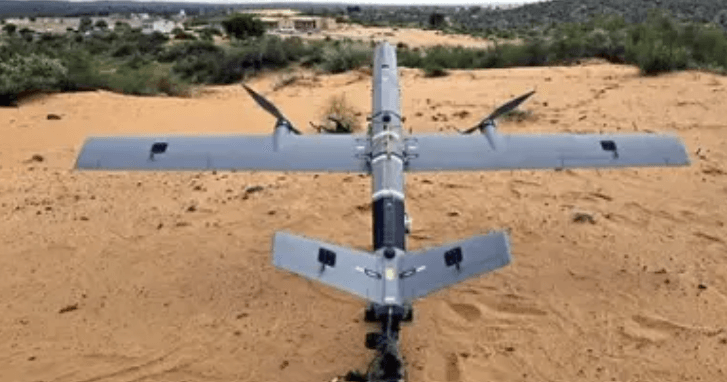
- An aerial weapon system combining the real-time reconnaissance and flight endurance of an unmanned aerial vehicle (UAV) with the lethal payload of a precision-guided missile. Unlike conventional surveillance UAVs that return to base, kamikaze drones are one-way suicide operators designed to loiter over an area, locate a high-value target, and crash into it to detonate their onboard warhead.
Developed:
- Global Systems: Pioneered by Israel Aerospace Industries (Harop, Harpy), Iran (Shahed-136) and Poland’s WB Group (Warmate), demonstrating diverse loitering munition technologies.
- Indigenous Indian Developers: Developed by CSIR-NAL (NAVIC-guided systems), Solar Industries and Z-Motion (Nagastra-1) and TASL (ALS-50), alongside Alpha Design-Elbit’s SkyStriker.
Aim: Designed to destroy hostile positions, fortified bunkers, radar installations and mobile targets through precision strikes while reducing risks to military personnel.
Key Features of Kamikaze Drones:
- Loiter and Strike Capability: Can remain airborne for 30 minutes to several hours, conducting real-time surveillance, tracking hostile movements and striking targets when identified.
- Low Radar Signature and Stealth: Lightweight airframes, low-altitude flight and reduced acoustic signatures make these drones difficult to detect and intercept using conventional air defence systems.
- GPS and NAVIC Guidance: Employ satellite navigation, EO/IR sensors and operator-controlled targeting, with certain indigenous systems integrating NAVIC for improved navigation resilience.
- Cost Advantage and Swarm Potential: Relatively inexpensive drones can operate in coordinated groups, overwhelming enemy defences and forcing adversaries to deploy costly interception systems.
- Versatile Tactical Payloads: Carry high-explosive, fragmentation or anti-armour warheads, with payloads varying across platforms to engage specific targets while minimising unintended damage.
Significance:
- Enhances counter-insurgency and counter-terrorism operations in jungles and urban areas by enabling surveillance and precision strikes against concealed hostile positions.
- Strengthens unmanned precision-strike capabilities and supports Aatmanirbhar Bharat through domestic drone manufacturing and reduced dependence on imports.