Prelims
Palaeoloxodon namadicus
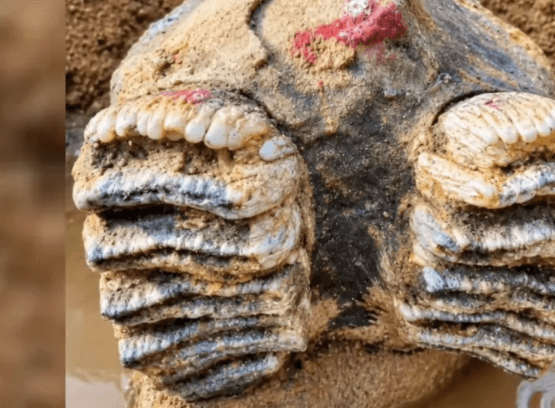
Context: A 75 cm long fossilised jaw of a prehistoric elephant, preliminarily identified as belonging to the extinct straight-tusked giant Palaeoloxodon namadicus, was exposed by river erosion at Patai Ghat along the Narmada River.

About Palaeoloxodon namadicus:
What it is?
- An extinct species of prehistoric straight-tusked elephant (also known as the Asian straight-tusked elephant) that lived during the Middle to Late Pleistocene epoch (~700,000 to 25,000–30,000 years ago) and is widely regarded by palaeontologists as one of the largest land mammals ever to have walked the Earth.
Discovery & Taxonomy:
- First scientifically described in 1846 by British palaeontologists Hugh Falconer and Proby Cautley (initially named Elephas namadicus) based on fossils unearthed in the Narmada Valley.
- Evolved from an ancestral African population (Palaeoloxodon recki) that migrated into Eurasia, later branching into the Indian P. namadicus and the European P. antiquus.
Habitat & Geographical Distribution: Primarily inhabited the lush, marshy river valleys, floodplains, and woodlands of the Indian subcontinent, with related remains also reported across parts of Southeast Asia.
Key Characteristics:
- Colossal Body Size: Estimated to stand 5–5 metres tall and weigh 18–22 tonnes, potentially ranking among the largest terrestrial mammals in history.
- Distinctive Skull Crest: Possessed a prominent parieto-occipital crest, providing attachment for powerful neck muscles supporting its massive head and tusks.
- Enormous Straight Tusks: Featured exceptionally long, relatively straight tusks exceeding 3.5 metres, potentially weighing over 120 kg each.
- High-Crowned Ridged Molars: Had hypsodont molars with parallel enamel ridges, adapted for grinding tough grasses and fibrous Pleistocene vegetation.
- Matriarchal Social Structure: Likely lived in female-led family herds, with juveniles remaining in groups while adult males adopted largely solitary lifestyles.
Significance of the Raisen Discovery:
- Fossils from the Baneta Formation help reconstruct central India’s prehistoric environment, geological history and ecosystems supporting diverse Pleistocene megafauna.
- Reinforces the valley’s palaeontological significance, particularly following the 1982 Narmada Human fossil discovery at Hathnora, highlighting the need for site conservation.