Prelims
The International Court of Justice (ICJ)
Context: The International Court of Justice (ICJ) ruled 9–6 that Myanmar committed genocide against the Rohingya in Rakhine State.

About The International Court of Justice (ICJ):
What it is?
- The principal judicial organ of the United Nations (commonly referred to as the World Court), functioning as a civil international tribunal that settles legal disputes between sovereign states and gives advisory opinions on legal questions—distinct from the International Criminal Court (ICC), which prosecutes individuals.
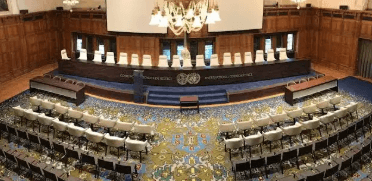
Located in: Seated at the Peace Palace in The Hague, Netherlands (the only one of the six principal UN organs not located in New York).
History:
- Predecessor (PCIJ): Succeeded the Permanent Court of International Justice (PCIJ), which was established by the League of Nations in 1920 and began sitting in 1922.
- Establishment (1945–1946): Established in June 1945 by the Charter of the United Nations (Articles 7 and 92–96), began work in April 1946.
Aim: To peacefully resolve legal disputes between states under international law, prevent conflicts and uphold justice and the global rule of law.
Key Functions of the ICJ:
- Adjudicating Inter-State Disputes: Settles binding legal disputes between consenting states involving territorial boundaries, maritime claims, treaty violations and international conventions.
- Issuing Advisory Opinions: Provides non-binding legal opinions on international law questions referred by the UN General Assembly, Security Council and authorised UN agencies.
- Binding Provisional Measures: Issues urgent interim orders to protect parties’ rights and preserve evidence pending final judgments, as demonstrated in the Myanmar genocide case.
- Clarifying International Law: Interprets international treaties, customary law and general legal principles, helping establish authoritative interpretations of states’ international legal obligations.
- 15 Independent Judges: Comprises 15 judges elected for nine-year terms by the UN General Assembly and Security Council, with English and French as official languages.
ICJ Verdict on Myanmar: Key Highlights
- In a 9–6 verdict on November 19, 2026, the ICJ held Myanmar responsible for genocide against the Rohingya, recognising The Gambia’s standing under the Genocide Convention.
- The Court inferred genocidal intent from systematic killings, sexual violence and persecution, finding breaches of genocide-prevention obligations and its 2020 evidence-preservation order.
- Ordered Myanmar to investigate perpetrators, facilitate safe Rohingya return and provide compensation, with a two-year deadline to report restitution and proposed compensation arrangements.
- Despite its binding judgment, the ICJ lacks independent enforcement powers, making implementation dependent on Myanmar’s compliance and potential UN Security Council action.