The Marine Heatwaves (MHWs)
Context: The Indian National Centre for Ocean Information Services (INCOIS), Hyderabad, issued an alert for a Marine Heatwave (MHW) spanning the Arabian Sea, Bay of Bengal, and Indian Ocean, with sea surface temperatures rising up to 1OC above normal.

About The Marine Heatwaves (MHWs):
What It Is?
- A marine heatwave is an extreme oceanic weather event characterized by prolonged, abnormally warm sea surface temperatures (SST) that persist above the 90th percentile of the regional climatological threshold for at least five consecutive days.
Key Data / Stats:
- Regional Coverage: INCOIS’s MAHAS monitors marine heatwaves across 6 ocean basins and 14 Indian coastal sectors, including the Red Sea, Persian Gulf and South China Sea.
- Intensity Classification: Watch and Alert levels indicate sustained sea temperature anomalies reaching 1°C above normal in affected regions.
- Indian Ocean Warming: The Tropical Indian Ocean is warming rapidly, with marine heatwaves in the western Indian Ocean increasing nearly fourfold over recent decades.
- Swell Surge Waves: Swell waves exceeding 1 metre are forecast across 11 coastal States and UTs, including Gujarat, Kerala, Odisha, Tamil Nadu and Andaman & Nicobar Islands.
How Marine Heatwaves are Formed?
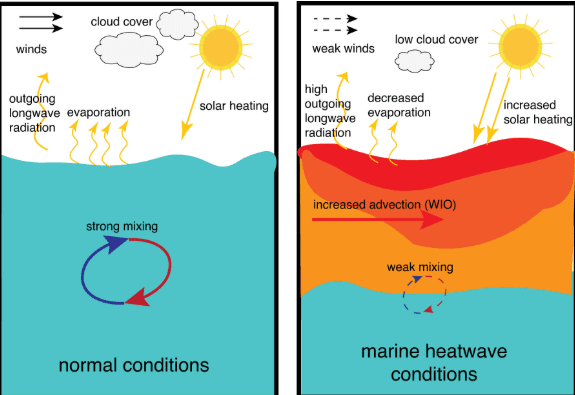
- High Atmospheric Solar Heating (Air-Sea Heat Flux): Persistent high-pressure atmospheric ridges and cloud-free conditions allow intense solar radiation to heat the ocean’s surface layer without natural cloud-cover reflection.
- Suppressed Wind Speeds and Weakened Vertical Mixing: Sluggish surface winds reduce mechanical wave turbulence, preventing warm surface water from mixing with cooler water from deeper ocean layers.
- Shallow Ocean Mixed Layer: Warm, buoyant water remains concentrated in a thin upper layer of the ocean, trapping thermal energy near the surface and causing temperatures to rise rapidly.
- Ocean Current Heat Advection: Shifts in horizontal ocean currents push warm equatorial waters into mid-latitude or coastal regions, raising localized sea surface temperatures.
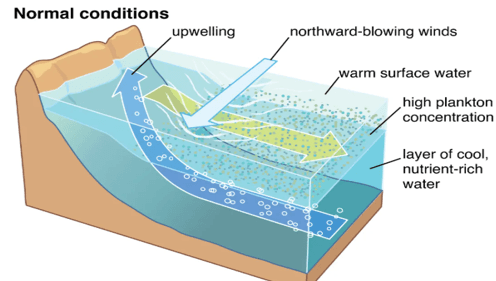
- Amplification by Climate Drivers (ENSO/IOD): Global climate change raises the baseline ocean temperature, while natural climate modes—such as a strong El Niño or a positive Indian Ocean Dipole—weaken equatorial upwelling and trigger widespread heat accumulation.
Implications of Marine Heatwaves:
- Mass Coral Bleaching & Calcification Arrest: Elevated water temperatures disrupt the obligate symbiosis between corals and zooxanthellae algae, expelling the photosynthetic algae and turning reefs stark white.
E.g., Threatening shallow-water fringing and barrier reefs across the Gulf of Mannar, Palk Bay, Lakshadweep atolls, and the Andaman Islands.
- Fish Migration and Collapse of Coastal Catch: Cold-water and pelagic fish species migrate poleward or dive to deeper, cooler depths to escape heat stress, moving beyond the reach of traditional artisanal fishing fleets.
E.g., Sudden declines in Sardine and Mackerel catches along the Kerala and Karnataka coasts during prolonged warm-water events.
- Proliferation of Harmful Algal Blooms (HABs): Warm, stagnant surface waters accelerate the growth of toxic phytoplankton and dinoflagellates, which deplete dissolved oxygen and produce marine neurotoxins.
E.g., “Red tide” occurrences suffocating intertidal cage aquaculture, benthic bivalves, and bottom-dwelling marine organisms.
- Damage to Coastal Seagrass Meadows and Kelp Ecosystems: Sustained heat stresses underwater seagrass beds, causing leaf die-offs and reducing carbon sequestration capacity.
E.g., Dieback of Halophila and Enhalus seagrass meadows, depriving endangered dugongs and green sea turtles of vital forage grounds.
- Atmospheric Feedback and Cyclone Intensification: High heat content in upper ocean waters acts as fuel for passing tropical depressions, enabling rapid storm intensification.
E.g., Low-pressure systems over the warm Arabian Sea and Bay of Bengal intensifying into severe cyclonic storms with heavier coastal rainbands.
Conclusion:
The concurrent marine heatwave warnings and swell surge alerts from INCOIS highlight the growing ecological stress across India’s ocean basins. As rising ocean temperatures threaten fragile coral reefs and alter the distribution of fish stocks, marine climate volatility directly endangers coastal livelihoods and maritime safety. Addressing these escalating oceanic threats requires strengthening real-time oceanographic observation networks, enforcing sustainable fisheries management, and incorporating marine early warnings into disaster risk reduction strategies.
How do marine heatwaves differ from long-term ocean warming? Analyse the factors responsible for their occurrence and their implications for marine ecosystems and regional climatic patterns.