Prelims
The SAMPADA Survey (2023–2025)
Context: The Indian Council of Medical Research (ICMR) released key findings from the SAMPADA (2023–2025) nutrition survey, showing an encouraging overall decline in anaemia prevalence across India compared to earlier national surveys.

About The SAMPADA Survey (2023–2025):
What it is?
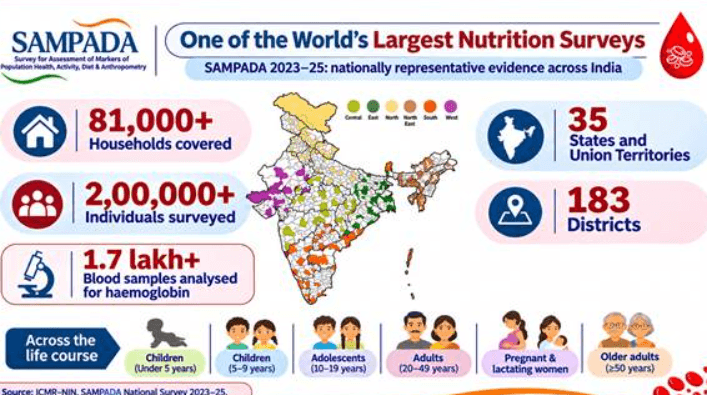
- The Survey for Assessment of Markers of Population Health, Activity, Diet and Anthropometry (SAMPADA)—one of the world’s largest nationally representative nutrition and health surveys assessing anaemia, micronutrient deficiencies, inflammation markers, diet, physical activity, and anthropometry across the entire life course.
Published by: Conducted by the Indian Council of Medical Research (ICMR), including ICMR–National Institute of Nutrition (NIN), under the Department of Health Research, Ministry of Health and Family Welfare.
History & Background:
- Methodological Improvement: Conducted during 2023–2025 to address limitations of earlier surveys like NFHS-5, which relied on capillary blood samples that often overestimated anaemia prevalence.
- Extensive National Coverage: Covered over 2 lakh individuals across 81,000 households in 183 districts across 35 States and UTs, analysing 1.7 lakh venous blood samples and nutritional biomarkers.
Key Findings of the SAMPADA Survey:
- Lower Anaemia Prevalence: Anaemia prevalence declined compared to earlier national surveys, particularly among children aged 12–59 months, falling from 67.1% in NFHS-5 to 42%.
- Demographic and Gender Disparities: Anaemia affects 56% of reproductive-age women, 46% of adolescent girls and 22–23% of adolescent boys and adult men, highlighting significant gender disparities.
- Predominance of Mild Anaemia: Nearly half of affected women, adolescent girls and children, and three-fourths of affected boys and men have mild anaemia, highlighting opportunities for early intervention.
- Low Severe Anaemia Prevalence: Severe anaemia affects less than 2% of individuals across most age groups, indicating a relatively low prevalence of severe cases nationwide.
- Iron Deficiency Accounts for Half of Cases: Iron deficiency contributes to nearly 50% of anaemia cases among women, adolescent girls and children, necessitating attention to infections, haemoglobin disorders and chronic inflammation.
- Limited Role of Vitamin B12 and Folate: Similar deficiency levels among anaemic and non-anaemic individuals suggest that vitamin B12 and folate deficiencies may have a limited role in the overall anaemia burden.
- Life-Stage Concentration of Iron Deficiency: Iron deficiency predominantly affects under-five children, adolescent girls and reproductive-age women, while adolescent boys, adult men and older adults show comparatively lower prevalence.
- First National Baseline for Older Adults: Establishes nationally representative anaemia data for older adults, enabling targeted life-course interventions and strengthening test-and-treat strategies under Anaemia Mukt Bharat 2.0.