CME
The ‘Say No to Tobacco’ Pledge
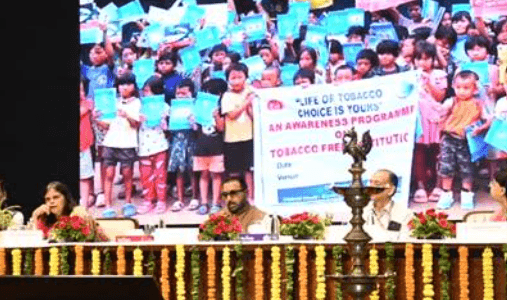
Context: Union Minister launched the 60-day Tobacco-Free Youth Campaign 4.0 (TFYC 4.0) in New Delhi, administering the ‘Say No to Tobacco’ pledge to promote tobacco-free campuses, youth awareness and addiction prevention.

About The ‘Say No to Tobacco’ Pledge:
What it is?
- A public health awareness and behavioural commitment initiative under the Tobacco-Free Youth Campaign 4.0, encouraging young people to reject tobacco and nicotine addiction and promote tobacco-free communities.
Nodal Ministry: Ministry of Health and Family Welfare (MoHFW).
Aim: To prevent tobacco initiation, encourage cessation and empower youth as ambassadors of a Tobacco-Free India, supporting the vision of Viksit Bharat 2047.
Key Features:
- Youth-Led Anti-Tobacco Commitment: Encourages students to pledge against tobacco consumption and actively promote addiction-free lifestyles among peers and communities.
- Tobacco-Free Educational Campuses: Prioritises universities, colleges and schools through awareness campaigns and initiatives promoting tobacco-free learning environments.
- 60-Day Nationwide Campaign: Conducts intensive tobacco prevention, cessation awareness and community mobilisation activities across States and Union Territories.
- Strengthening Tobacco Control Enforcement: Promotes stricter implementation of tobacco control laws, particularly measures protecting children and adolescents from tobacco exposure.
- Whole-of-Government Participation: Mobilises educational institutions, healthcare professionals, enforcement agencies and communities through a coordinated, six-pronged tobacco control strategy.
Significance:
- Reduces risks of nicotine dependence, impaired brain development, cancer and respiratory diseases, promoting healthier future generations.
- Builds on earlier campaigns that declared over 5.8 lakh educational institutions and 73,000 villages tobacco-free, advancing preventive healthcare and community participation.
Relevance for UPSC Examination:
GS Paper II (Social Justice)
- Issues relating to the development and management of social sector services, particularly health.
- Government policies and interventions for public health and adolescent welfare.
GS Paper IV (Ethics)
- Attitude and Behavioural Change: Role of persuasion, peer influence and awareness in preventing addiction.
- Public Service Values: Social responsibility, community participation and ethical leadership in public health.