The Yamuna River
Context: Delhi is preparing to launch a tourist cruise service on the Yamuna ahead of Chhath Puja, despite recent Delhi Pollution Control Committee (DPCC) data showing severe water degradation downstream.

About The Yamuna River:
What it is?
- A major sacred and perennial river of northern India, and the longest river in the country that does not flow directly into the sea.
Origin: Originates at an elevation of 6,387 metres from the Yamunotri Glacier near the Banderpooch peaks in the Lower Himalayas, Uttarkashi district, Uttarakhand.
States It Flows Through: Flows through Uttarakhand, Himachal Pradesh, Haryana, Delhi, and Uttar Pradesh, with its broader drainage basin extending into Rajasthan and Madhya Pradesh.
Tributaries of Yamuna:
- Upper Tributaries: Tons (its largest tributary, contributing roughly 60% of its upper water volume), Giri, Rishi Ganga, and Hanuman Ganga.
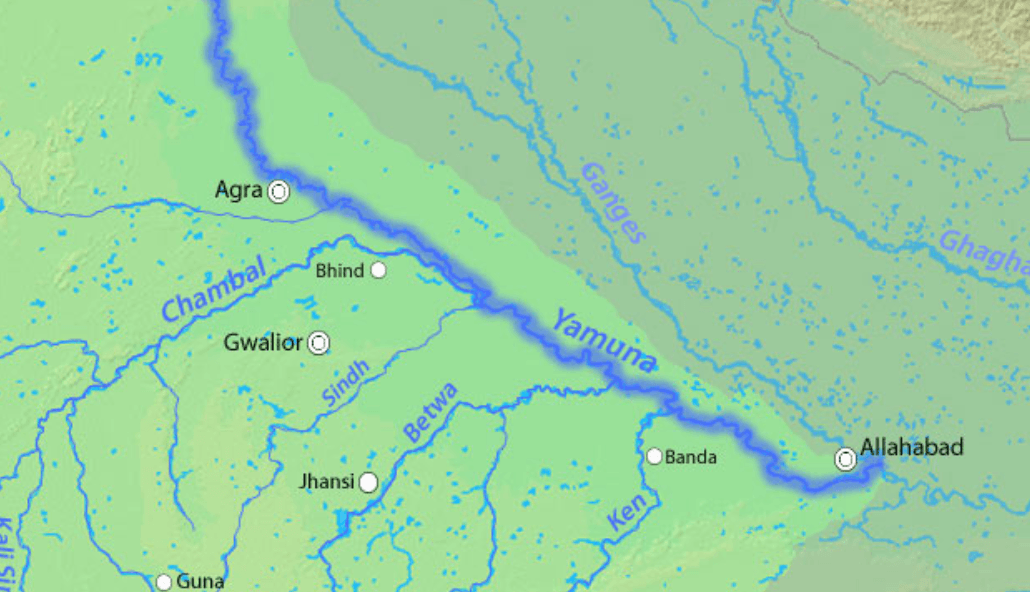
- Right-Bank Tributaries: Chambal, Sind, Betwa, and Ken.
- Left-Bank Tributary:
Yamuna is a Tributary of: The Ganges (Ganga); it merges with the Ganga at the sacred Triveni Sangam in Prayagraj (Allahabad), Uttar Pradesh.
Key Features of the Yamuna River:
- Course and Catchment Basin: The Yamuna River extends approximately 1,376 km, draining nearly 3.66 lakh sq. km, making it a major tributary of the Ganga.
- Tectonic Paleochannel Evolution: Geological interpretations suggest the Yamuna once flowed into the Ghaggar–Hakra river system, before tectonic changes diverted its course towards the Ganga basin.
- Critical Urban Delhi Stretch: The Yamuna traverses 52 km through Delhi, with its 22-km Wazirabad–Okhla stretch receiving heavy sewage and industrial pollution through major drains.
- Extensive Irrigation Network: Barrages at Dakpathar, Hathnikund, Wazirabad and Okhla divert water into irrigation canals, reducing downstream environmental flows, particularly during dry seasons.
- High Biochemical Pollution: Downstream of Wazirabad, high BOD levels (30–66 mg/L) and faecal contamination indicate severe pollution, contributing to toxic foam formation.
Significance:
- The Yamuna supplies drinking water to Delhi-NCR and supports extensive irrigation across Haryana and western Uttar Pradesh, sustaining agriculture and livelihoods.
- Revered as Goddess Yamuna, the river connects major pilgrimage and historical centres, including Yamunotri, Mathura, Vrindavan, Agra and Prayagraj.