
India needs a comprehensive doctrine on space security
Context: Experts have called for a comprehensive Space Security Doctrine for India to address emerging threats such as jamming, spoofing and cyberattacks, highlighting gaps in threat attribution and crisis response mechanisms.
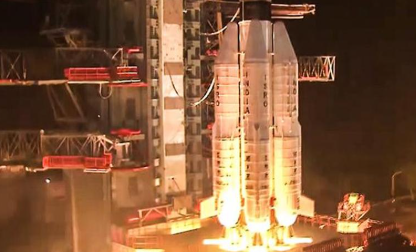
About India needs a comprehensive doctrine on space security:
What it is?
- A proposed strategic framework to safeguard India’s military, civilian and commercial space infrastructure against kinetic and non-kinetic threats. It establishes principles for deterrence, threat attribution, crisis response, systemic resilience and rapid recovery while ensuring the peaceful use of outer space.
Strategic Significance of Space for India:
- Civilian & Economic Backbone: Satellites underpin critical everyday infrastructure across telecommunications, banking networks, logistics, agriculture, weather forecasting, and disaster management.
- Military Force Multiplier: Space-enabled assets provide vital intelligence, surveillance, reconnaissance (ISR), secure communications, positioning, navigation, timing (PNT), and battlefield situational awareness.
- National Resilience & Strategic Autonomy: Uninterrupted space-based services directly sustain economic stability, governance, and sovereign decision-making during crises.
- Commercial & Dual-Use Integration: Rapid growth of private satellite operators and commercial services embeds space infrastructure across both public governance and private enterprise.
Emerging Threats to India’s Space Security:
- Shift from Destruction to Non-Kinetic Disruption: Adversaries increasingly favor reversible, deniable interference that degrades satellite services without physically destroying spacecraft.
- Electronic Warfare (Jamming & Spoofing): Deliberate signal jamming and navigation spoofing can disrupt military communications, missile guidance, and civilian aviation or maritime transit.
- Cyber-Attacks on Ground & Space Networks: Intrusions targeting ground control stations, telemetry links, and commercial user terminals can compromise entire satellite constellations.
- Orbital Congestion & ASAT Proliferation: Expanding counter-space weapons, co-orbital proximity operations, and cascading space debris pose persistent risks to high-value Indian satellites.
India’s Existing Space Security Framework:
- Indian Space Policy 2023: Delineates roles across ISRO, NewSpace India Limited (NSIL), IN-SPACe, and private non-governmental entities (NGEs) for commercial and strategic space activities.
- ISRO’s Space Situational Awareness (ISSAR-2025): Documents orbital object tracking, collision avoidance maneuvers, and debris mitigation through initiatives like Project NETRA and IS4OM.
- Defence Space Agency (DSA) & Mission Shakti: Established tri-service coordination via the DSA and demonstrated kinetic deterrence through the 2019 ASAT test (Mission Shakti), alongside DefSpace startup initiatives.
Challenges in Ensuring Space Security:
- Ambiguity in Attack Thresholds & Escalation: Undefined red lines—such as distinguishing temporary cyber or signal interference from kinetic attacks—risk either under-reaction or inadvertent escalation.
E.g., lacking clear response triggers when GPS/NavIC spoofing disrupts military logistics without damaging hardware.
- Attribution & Differentiation Difficulties: Separating hostile interference from accidental signal overlap, space weather anomalies, or technical faults remains technically and legally complex.
E.g., tracing cross-border cyber intrusions routed through third-party commercial ground stations.
- Ground-to-Space Ecosystem Vulnerability: Threats extend beyond satellites to exposed ground stations, undersea data links, and commercial user terminals.
E.g., disruption to a private satellite operator impairing public banking, telecom, or disaster-response networks.
- Siloed Government–Commercial Coordination: Expanding private space players operate outside military command structures, creating gaps in threat sharing and joint incident response.
Way Forward: Towards a Comprehensive Space Security Doctrine
- Prioritize Systemic Resilience & Redundancy: Build multi-orbit, distributed satellite architectures with signal redundancy so essential functions survive localized disruptions.
- Advance Space-Domain Awareness (SDA) & Attribution: Upgrade orbital and ground sensor networks for real-time anomaly detection, forensic attribution, and clear escalation thresholds.
- Develop Rapid Reconstitution & Recovery: Invest in responsive launch vehicles (like SSLV), spare satellite inventories, and cyber-hardened ground segments to restore lost capabilities quickly.
- Institutionalize Public–Private Partnerships: Establish formal threat-intelligence sharing and security standards linking ISRO, the DSA, and commercial space operators.
- Promote Peaceful Use & Responsible Norms: Anchor the doctrine in deterrence, resilience, and recovery rather than orbital weaponization, while shaping global norms for responsible space behavior.
Conclusion:
As space-enabled services become inseparable from India’s economic vitality and military readiness, safeguarding orbital infrastructure is essential to preventing vulnerabilities on Earth. A comprehensive space-security doctrine—built on systemic resilience, space-domain awareness, rapid reconstitution, and public-private synergy—will enable India to deter, attribute, and withstand non-kinetic disruptions while upholding the peaceful use of outer space.
Discuss the factors driving the rapid growth of India’s private space sector. Analyse its significance for the national space economy. Examine the challenges that must be addressed to realise its full potential.