Prelims
Polar Satellite Launch Vehicle (PSLV-N1)
Context: ISRO Chairman V. Narayanan announced that India’s first industry-manufactured Polar Satellite Launch Vehicle (PSLV-N1) is targeting its maiden launch in the first quarter of 2027.
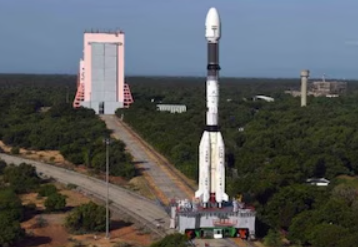
About Polar Satellite Launch Vehicle (PSLV-N1):
What it is?
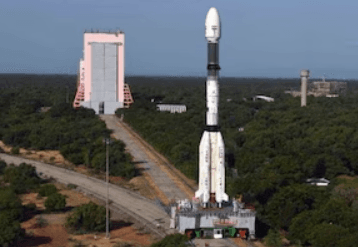
- India’s first fully industry-built Polar Satellite Launch Vehicle (PSLV-XL variant)—designated PSLV-N1—marking the transition of ISRO’s proven four-stage medium-lift workhorse rocket from government-led assembly to end-to-end domestic private-sector manufacturing.
Organisation: Manufactured by a consortium led by Hindustan Aeronautics Limited (HAL) and Larsen & Toubro (L&T) under a September 2022 contract (₹860 crore for five PSLV-XL rockets) awarded by NewSpace India Limited (NSIL), ISRO’s commercial arm.
Aim: To increase India’s satellite launch frequency by transferring launch vehicle manufacturing to domestic industries, enabling ISRO to focus on advanced research, technological innovation and deep-space missions.
Key Features of PSLV-N1:
- End-to-End Industry Manufacturing: Unlike earlier ISRO-integrated PSLVs, the HAL–L&T consortium independently handles component procurement, vehicle integration and testing, marking a major shift towards industry-led manufacturing.
- Four-Stage Solid–Liquid Propulsion: Features alternating solid and liquid propulsion stages with six extended strap-on boosters, carrying up to 1,750 kg to Sun-Synchronous Polar Orbit and 1,425 kg to Geosynchronous Transfer Orbit.
- Post-Failure Component Upgrades: Incorporates revised vendor components and third-stage quality improvements recommended by ISRO’s Failure Assessment Committee following the PSLV-C61 and PSLV-C62 mission setbacks.
- Multi-Orbit Versatility: Inherits PSLV’s proven capabilities demonstrated through Chandrayaan-1, Mangalyaan and Aditya-L1 missions, alongside the successful launch of 434 foreign satellites from 34 countries.
- Earth Observation and Commercial Payloads: Scheduled to deploy the Earth Observation Satellite (EOS-10) alongside commercial payloads, expanding India’s operational satellite fleet and strengthening commercial launch capabilities.
Significance:
- Advances the 2020 space reforms by transforming Indian industries from component suppliers into launch vehicle manufacturers.
- Boosts launch frequency and global market share, supporting India’s ambition to build a $40–45 billion space economy within a decade.