CME
Swayamsiddha National Conference 2026
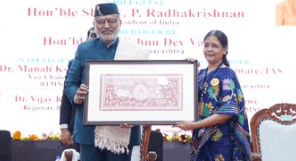
Context: Vice-President C. P. Radhakrishnan inaugurated the Swayamsiddha National Conference 2026 in Nagpur, emphasising women’s transition from educational empowerment to economic independence and leadership.

About Swayamsiddha National Conference 2026:
What it is?
- A national-level conference on women’s empowerment through higher education, skill development, economic independence and leadership, bringing together universities, policymakers and other stakeholders.
Theme: “VIJAYA – A Journey of Empowerment through Education”.
Aim: To transform educational opportunities into meaningful leadership, entrepreneurship and economic independence for women, particularly those from rural and disadvantaged backgrounds.
Key Features:
- Maharashtra–VIJAYA Framework: Proposes a structured institutional framework for advancing women’s empowerment and leadership through higher education.
- Education-to-Leadership Approach: Encourages universities to move beyond academic qualifications by promoting skills, research, entrepreneurship and participation in institutional decision-making.
- Multi-Stakeholder Collaboration: Promotes collective responsibility among governments, universities, industry, civil society and families in advancing women-led development.
- Knowledge Sharing and Best Practices: Released two compendiums, Hundred Voices of Young Women and Best Practices in Higher Education, alongside unveiling the Swayamsiddha logo.
Significance:
- Facilitates the transition from welfare-oriented women’s development to active participation in economic, social and political decision-making.
- Promotes equitable opportunities for women from rural, remote and economically disadvantaged communities, bridging educational and leadership gaps.
Relevance in UPSC Examination:
| Paper | Syllabus Relevance |
| GS Paper I | Role of women and women’s organisations, social empowerment. |
| GS Paper II | Issues relating to education, human resources and welfare of vulnerable sections. |
| GS Paper IV | Gender equality, social justice, inclusiveness and ethical leadership. |
| Essay | Women-led development, education as an instrument of empowerment and gender justice. |