CME
The Swachh Shauchalay – Garimamay Bhavishya (SSGB) Campaign
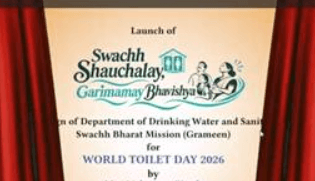
Context: The Ministry of Jal Shakti launched the Swachh Shauchalay – Garimamay Bhavishya (SSGB) campaign on World Toilet Day 2026 (November 19) to improve the functionality, accessibility and sustainability of rural sanitation facilities.

About The Swachh Shauchalay – Garimamay Bhavishya (SSGB) Campaign:
What it is?
- A nationwide sanitation campaign under the Swachh Bharat Mission (Grameen) to assess, repair and upgrade community, institutional and household toilets while promoting sanitation awareness and behavioural change.
World Toilet Day 2026 Theme: “Safe toilets. Equal futures.”
Aim: To ensure safe, functional, accessible and dignified sanitation facilities for all, particularly women, girl students and persons with disabilities, while sustaining Open Defecation Free (ODF) status.
Key Features of the Campaign:
- Sanitation Infrastructure Assessment: Assesses Community Sanitary Complexes (CSCs) and institutional toilets in schools, Anganwadi centres and Panchayat buildings to undertake necessary repairs, maintenance and restoration.
- Toilet Retrofitting and Faecal Sludge Management: Promotes conversion of single-pit toilets into twin-pit systems, installation of soak pits for septic tanks and mechanised desludging for safe faecal sludge management.
- Operation and Maintenance: Strengthens toilet maintenance mechanisms while encouraging communities to improve sanitation facilities through cleanliness, local wall art, signage and better surroundings.
- Behavioural Change and Inclusive Sanitation: Promotes continued toilet usage, handwashing, personal hygiene and four-way waste segregation through Behaviour Change Communication (BCC), prioritising women, children and Divyangjan.
- Digital Monitoring and Sanitation Audits: Introduces a dedicated reporting module for States and UTs and mandates completion of pending Swachh Seva Aankalan (SSA) assessments by November 30, 2026.
Significance:
- Ensures equitable access to safe sanitation, strengthening gender equality, menstrual hygiene and accessibility for persons with disabilities.
- Reduces sanitation-related health risks while promoting Jan Bhagidari, civic responsibility and grassroots participation in achieving Sampoorna Swachhata.
Relevance in UPSC Exam Syllabus:
| Paper | Syllabus relevance |
| GS Paper I | Women and social empowerment. |
| GS Paper II | Government policies and interventions, health, sanitation and welfare of vulnerable sections. |
| GS Paper III | Environmental pollution, waste management and sustainable development. |
| GS Paper IV | Human dignity, civic responsibility, behavioural change and community participation. |