Prelims
The 100 Drums Wangala Festival
Context: Meghalaya’s 100 Drums Wangala Festival set a Guinness World Record for the Largest Wangala Dance, featuring 1,000 drummers and 1,500 dancers during its golden jubilee near Tura.

About The 100 Drums Wangala Festival:
What it is?
- The most prominent post-harvest thanksgiving festival celebrated by the Garo (A’chik) tribe to honour Misi Saljong (the Sun God and giver of agricultural fertility), marking the end of a period of agrarian toil and the onset of winter.
Region: Celebrated across the Garo Hills of western Meghalaya (and adjoining Garo-inhabited areas of Assam and Bangladesh), with the main organized state festival hosted annually at Wangala A’dam (Garo Heritage Village) in Chibragre near Tura, West Garo Hills.
Key Features of the Festival:
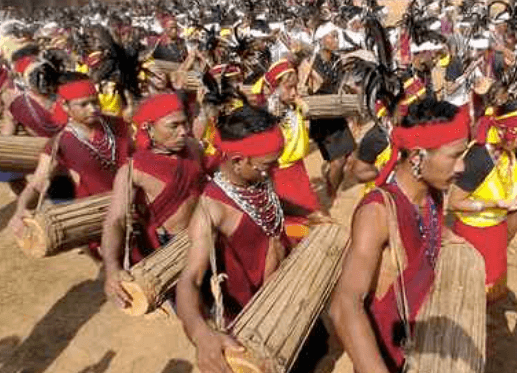
- Traditional Dama Drum Ensemble: Features rhythmic performances using wooden dama drums, brass gongs (rang) and buffalo-horn flutes (adil), with participation reaching 1,000 drummers during its golden jubilee.
- Sacred Thanksgiving Rituals: Begins with Rugala, involving offerings of rice and rice beer to Misi Saljong, followed by Cha’chat So’a, the ceremonial burning of incense.
- Traditional Attire and Headdresses: Participants wear colourful Dakmanda and Gando garments, complemented by feather-adorned Do’me headgear, reflecting Garo cultural identity and ancestral traditions.
- Synchronized Wangala Dance: Men perform rhythmic dama drumming, while women execute coordinated movements resembling agricultural sowing and harvesting, celebrating communal unity and gratitude.
Significance:
- Safeguards traditional music, oral folklore, weaving practices and indigenous rituals, ensuring intergenerational transmission of the A’chik community’s cultural heritage.
- Enhances Meghalaya’s cultural tourism appeal, attracting visitors while generating livelihood opportunities for local artisans and communities in the Garo Hills.