Prelims
The 557th birth anniversary of Guru Nanak Dev Ji
Context: The Indian High Commission in Colombo commemorated the 557th birth anniversary of Guru Nanak Dev Ji at the Swami Vivekananda Cultural Centre on November 24, 2026.

About The 557th birth anniversary of Guru Nanak Dev Ji:
Who he was?
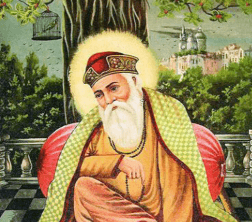
- The founder of Sikhism and the first of the ten Sikh Gurus (1469–1539 CE), revered globally as a spiritual teacher, poet-musician, and social reformer who preached devotion to Ik Onkar (One Supreme, Formless Creator) and the universal brotherhood of humankind.
Early Days:
- Born on 15 April 1469 (observed annually on Kartik Puranmashi) at Rai-Bhoi-di Talwandi (now Nankana Sahib in Punjab, Pakistan) to Mehta Kalu and Mata Tripta, with an elder sister, Bebe Nanaki.
- Showed a deeply contemplative mind early on, mastering Punjabi, Sanskrit, and Persian, and famously using trade money given by his father to feed hungry ascetics—an act celebrated as Sacha Sauda (True Bargain).
- Married Mata Sulakhni Ji (having two sons, Sri Chand and Lakhmi Das) and worked as a storekeeper (Modikhana) under Nawab Daulat Khan Lodhi at Sultanpur Lodhi until a transformative spiritual revelation while bathing in the Vain Nadi led him to declare, “There is neither Hindu nor Muslim”.
Bhakti Movement & His Contributions:
- Core Philosophy & Three Pillars: Rejected empty ritualism, caste hierarchy, and ascetic renunciation, advocating a householder’s life anchored in Naam Japna (meditating on God’s Name), Kirat Karni (honest, hardworking livelihood), and Vand Chakna (sharing with the needy).
- Four Great Spiritual Journeys (Char Udasis): Travelled extensively across India, Sri Lanka (Ceylon), Tibet, and West Asia (including Mecca, Medina, and Baghdad) alongside his lifelong Muslim rabab-playing companion Bhai Mardana, establishing preaching centres called Manjis.
- Institutionalizing Equality (Langar & Sangat): Founded Kartarpur in 1522 and institutionalized Sangat (congregational worship) and Langar (community kitchen), where people of all castes, religions, and genders sit together in one row (Pangat) to share meals.
- Championing Gender Equality & Social Justice: Condemned caste discrimination and practices that marginalized women, affirming their spiritual equality, and courageously denounced Mughal emperor Babur’s 1520 invasion and atrocities at Saidpur/Eminabad.
- Sacred Hymns (Gurbani): Composed 974 poetic hymns in classical Indian Ragas—including Japji Sahib, Asa Di Var, Sidh Gosht, and Bara Mah—later compiled into the Adi Granth (Sri Guru Granth Sahib) by Guru Arjan Dev Ji.
Last Days:
- Settling at Kartarpur (1522–1539): Spent the final 17 years of his life farming, composing hymns, and nurturing the first Sikh community at Kartarpur on the banks of the Ravi River.
- Appointing a Successor & Passing (1539): After testing his sons and disciples, he bypassed hereditary succession and installed his devoted follower Bhai Lehna Ji as Guru Angad Dev Ji (the Second Nanak), before merging into eternal light (Jyoti Jot) on 22 September 1539.