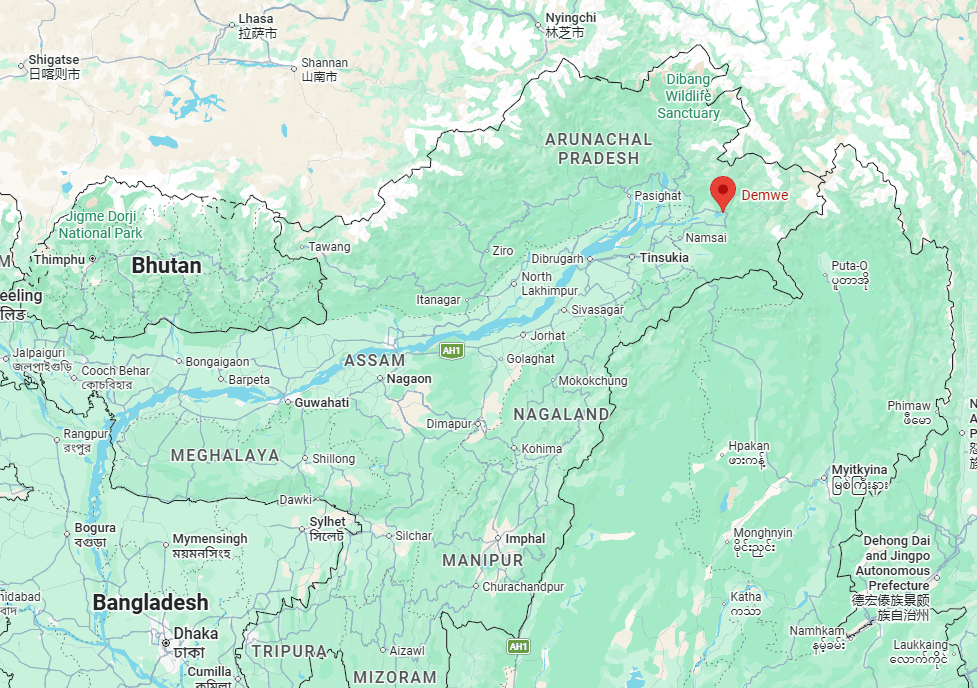
Mapping
The Demwe Lower Hydroelectric Project
Context: Former civil servants under the Constitutional Conduct Group (CCG) urged authorities to cancel the 1,750-MW Demwe Lower Hydroelectric Project in Arunachal Pradesh.
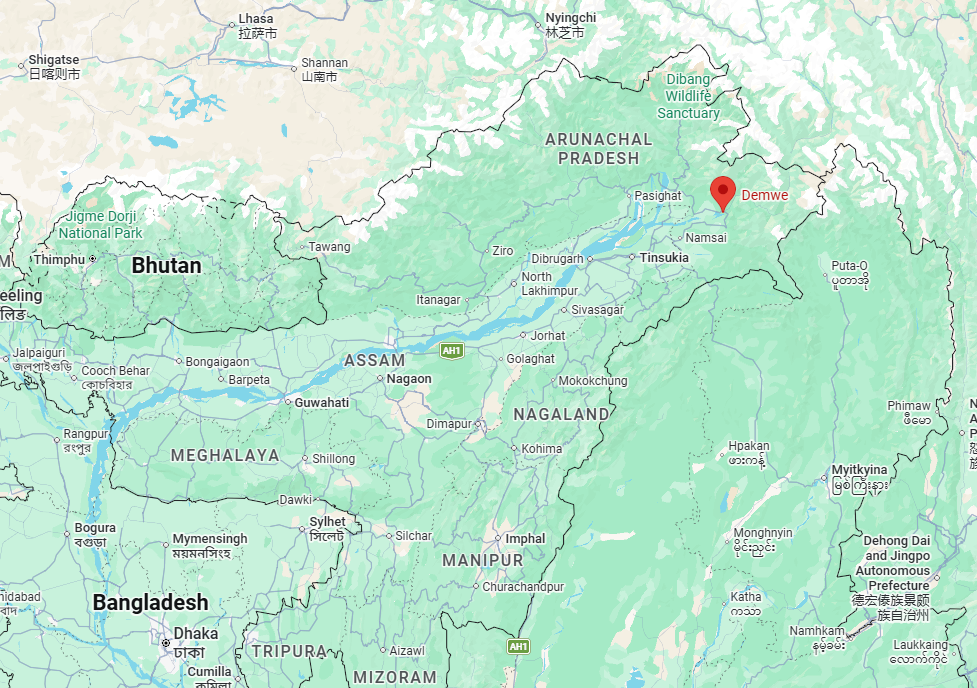
About The Demwe Lower Hydroelectric Project:
What it is?
- A proposed 1,750-MW run-of-the-river peaking hydropower project featuring a large concrete gravity dam, currently pursued by private developer Greenko after acquiring the stalled project.
Located in: Situated in Lohit district, Arunachal Pradesh, immediately downstream of the sacred Parashuram Kund pilgrimage site and within 50 metres of the Kamlang Tiger Reserve boundary.
River Associated: Constructed across the Lohit River (a major eastern tributary of the Brahmaputra River originating in eastern Tibet).
History:
- Initial Clearances (2010–2012): Originally awarded to Athena Energy Ventures, receiving initial environmental clearance in 2010 and forest/wildlife approvals by 2012 despite dissent from independent NBWL members.
- NGT Suspension & Revival (2017–2026): Suspended by the National Green Tribunal (NGT) in October 2017 over procedural irregularities in wildlife clearance; later acquired by Greenko and brought back before the SC-NBWL for fresh clearance review in July 2026.
Key Features of the Dam & Project:
- Large Concrete Gravity Structure: Envisages a massive concrete gravity dam designed with a reservoir-backed peaking-power operational model.
- Extensive Forest Diversion & Submergence: Requires diverting 1,416 hectares (ha) of forest land, submerging ~1,590 ha, and felling approximately 43,000 trees.
- Proximity to Protected Areas: The submergence zone extends into the Eco-Sensitive Zone of Kamlang Tiger Reserve (within 50 metres of its boundary) and affects downstream habitats including Dibru-Saikhowa National Park in Assam.
- Sharp Lean-Season Flow Fluctuations: Designed to hold back river water for nearly 20 hours daily before releasing sudden peaking surges of up to 1,729 cubic metres per second.
- Threat to Endangered Biodiversity: Impacts habitats of the critically endangered White-Bellied Heron, Bengal Florican, Gangetic River Dolphin, Mishmi Takin, Red Panda, Eastern Hoolock Gibbon, and four big cat species.
Significance:
- Highlights the need to balance hydropower development in the fragile Eastern Himalayas with biodiversity safeguards and environmental regulations.
- Raises concerns over Mishmi ancestral lands, forest-based livelihoods and the sacred Parashuram Kund.