Mapping
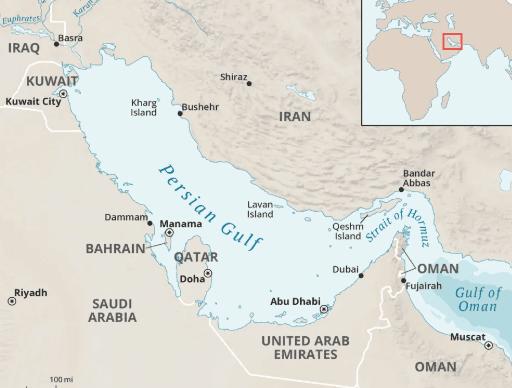
The Persian Gulf
Context: A Liberia-flagged crude oil tanker, MT FUJAIRAH ENERGY, was struck by an unidentified projectile while transiting from Al Ruwais to Dubai in the Persian Gulf, leaving four crew members injured, including an Indian national.

About The Persian Gulf:
What it is?
- A shallow, highly strategic marginal sea of the Indian Ocean connected to the Gulf of Oman and the Arabian Sea via the narrow Strait of Hormuz, serving as the world’s primary maritime corridor for crude oil and liquefied natural gas (LNG) transportation.
Located in: Positioned in Southwestern Asia (West Asia) between the Arabian Peninsula to the southwest and the Iranian plateau to the northeast, covering an area of approximately 241,000 square kilometres (93,000 square miles).
Bordering Nations: Iran, Iraq, Kuwait, Saudi Arabia, Bahrain, Qatar, United Arab Emirates (UAE) and Oman (via the Musandam Peninsula enclave).
Key Features of the Persian Gulf:
- Shallow and Asymmetrical Bathymetry: An exceptionally shallow sea averaging 35–50 metres in depth, with deeper waters along Iran’s coast and shallow, lagoon-lined shelves along Arabia.
- Extreme Hydrological and Climatic Conditions: Characterised by high salinity, intense evaporation and extreme temperatures, producing coastal salt flats (sabkhas) and seasonal northwesterly dust winds called Shamal.
- Freshwater and Sediment Inputs: Receives minimal freshwater from Arabia, with major inflows entering through the Shatt al-Arab delta, fed by the Tigris, Euphrates and Karun rivers.
- Massive Hydrocarbon Reserves: Contains extensive oil and natural gas deposits within sedimentary formations, including the South Pars/North Dome gas field, among the world’s largest.
- Strait of Hormuz Connection: Opens southeastward into the Strait of Hormuz, a critical maritime chokepoint carrying approximately one-fifth of global petroleum consumption through its shipping routes.
Implications:
- Military strikes or maritime blockades could disrupt oil shipments, increase global crude prices and raise tanker insurance costs, threatening international energy markets.
- Regional conflicts endanger Indian merchant sailors and maritime workers, potentially disrupting livelihoods and requiring coordinated diplomatic and consular assistance.
- Escalating tensions encourage greater naval deployments and mine-countermeasure operations, increasing military presence around the Persian Gulf and Strait of Hormuz.