Yamuna River Cruise Service
Context: Union Minister for Ports, Shipping and Waterways, alongside Delhi Chief Minister, inaugurated Delhi’s first recreational Yamuna River Cruise service at Sonia Vihar.

About Yamuna River Cruise Service:
What it is?
- Delhi’s first organized inland waterway passenger recreation and eco-tourism cruise service, operated using an environmentally friendly 30-seater electric vessel.
Background:
- Joint Development: Developed by the Inland Waterways Authority of India (IWAI) in collaboration with key Delhi bodies.
- National Waterway Development: Supports the operationalisation of National Waterway-110 under the National Waterways Act, 2016, promoting inland water transport and river tourism.
Route: Operates along the Sonia Vihar–Jagatpur stretch in North-East Delhi, covering an approximately 6-kilometre scenic round-trip route.
Key Features of the Cruise Service:
- Zero-Emission Electric Propulsion: Uses a 30-seater battery-electric vessel, ensuring quieter, emission-free operations while minimising environmental impacts on the Yamuna’s riverine ecosystem.
- Mythological Light and Sound Experience: Features a musical fountain and synchronised light-and-sound show highlighting Yamuna’s spiritual associations with Surya Dev, Yama and Krishna’s Kaliya Daman.
- Integrated Riverfront Recreation Hub: Includes floating jetties, online ticketing, food courts, shopping areas, children’s play zones and adventure sports, promoting integrated riverfront tourism.
About the Yamuna River:
What it is?
- A major perennial Himalayan River of northern India, revered in Hindu tradition as a sacred river and serving as a critical lifeline for agriculture, drinking water, and urban ecosystems across the Indo-Gangetic Plain.
Origin: Originates from the Yamunotri Glacier, near the Bandarpunch peaks in Uttarkashi, Uttarakhand, at approximately 6,387 metres above sea level.
Major Tributaries:
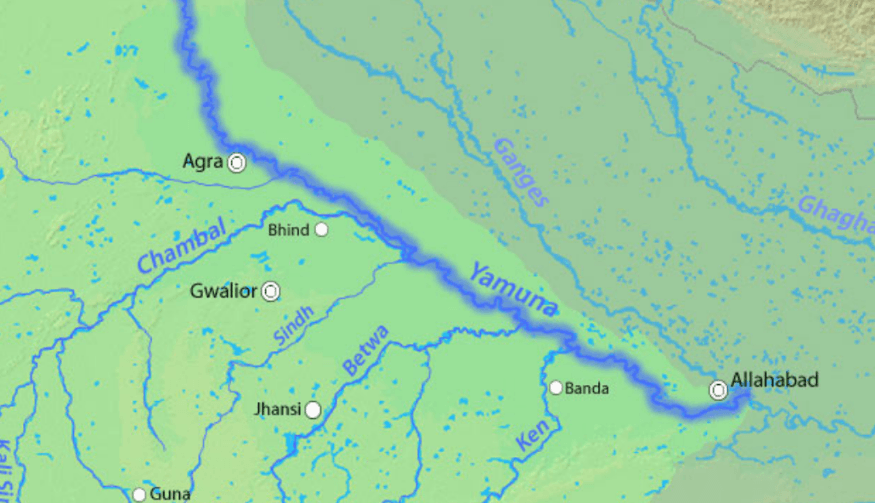
- Right-Bank Tributaries: Tons, Chambal, Sindh, Betwa and Ken, with Tons being its largest Himalayan tributary, contributing substantial water at their confluence.
- Left-Bank Tributaries: Hindon, Giri, Rishi Ganga, Hanuman Ganga and Sasur Khaderi, contributing to the river’s Himalayan and plains drainage systems.
Tributary of the Ganga: The Yamuna is the Ganga’s longest tributary, flowing approximately 1,376 km before joining it at Triveni Sangam, Prayagraj.
Key Features of the Yamuna River:
- Interstate Basin Footprint: Its 366,000 sq km basin spans seven States/UTs: Uttarakhand, Himachal Pradesh, Haryana, Delhi, Uttar Pradesh, Rajasthan and Madhya Pradesh.
- Asymmetrical Hydrological Profile: Features steep Himalayan upper reaches and slow-flowing alluvial plains, with downstream discharge significantly influenced by monsoon-fed tributaries like Chambal and Betwa.
- Severe Urban Pollution: Delhi’s 22-km Wazirabad–Okhla stretch, comprising less than 2% of the river’s length, contributes over 75% of its pollution load, primarily from sewage and industrial effluents.