Prelims
The ‘Pralay’ Quasi-Ballistic Missile
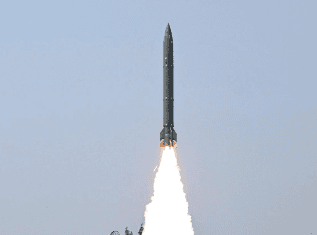
Context: The Defence Research & Development Organisation (DRDO) successfully conducted a flight-test of the indigenously developed surface-to-surface quasi-ballistic missile ‘Pralay’ from Dr APJ Abdul Kalam Island off the coast of Odisha.

About The ‘Pralay’ Quasi-Ballistic Missile:
What it is?
- A canisterised, tactical, surface-to-surface short-range quasi-ballistic missile (SRBM) designed specifically to deliver conventional warheads against high-value tactical and battlefield targets.
Developed & Manufactured By:
- Developed by: Research Centre Imarat (RCI), Hyderabad, in collaboration with other DRDO laboratories, using technologies derived from the Prithvi Defence Vehicle and Prahaar missile programmes.
- Manufactured by: Bharat Dynamics Limited (BDL) serves as the primary Development-cum-Production Partner (DcPP), supporting indigenous manufacturing and production of the missile system.
Aim: To provide the Indian Army with a rapid-response, precision-strike capability to destroy enemy military installations, radar systems and strategic targets using conventional weapons.
Key Features of the Missile:
- Range and Payload: Has a strike range of 150–500 km and can carry conventional warheads weighing 500–1,000 kg, enabling precision attacks on tactical targets.
- Solid Propellant and Mobility: Uses a single-stage solid-fuel rocket motor and road-mobile canisterised launch system, allowing rapid deployment and minimal launch preparation.
- Quasi-Ballistic Trajectory: Follows a low, manoeuvrable flight path instead of a conventional ballistic arc, making detection, tracking and interception more challenging
- Advanced Guidance System: Uses Ring Laser Gyro-based Inertial Navigation (RLG-INS) with satellite navigation and precision guidance technologies to improve targeting accuracy.
- Versatile Warheads: Can carry different conventional warheads, including high-explosive, fragmentation and penetration variants, for engaging various military targets.
Significance:
- Bridges the operational gap between Pinaka rocket systems and longer-range missiles, enhancing India’s conventional precision-strike capabilities.
- Strengthens India’s conventional deterrence along the LAC and LoC, providing a rapid-response capability against regional military threats.