Prelims
The Saltwater Crocodile
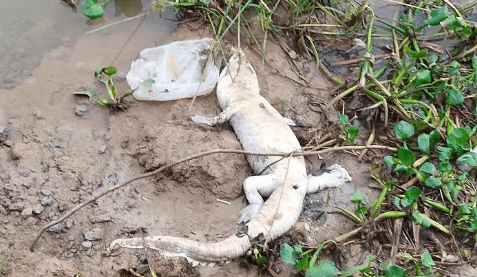
Context: Five saltwater crocodiles died within 27 days in and around Bhitarkanika National Park in Odisha’s Kendrapara district, bringing the tally of unnatural crocodile mortalities to 22 over six years and 44 over 14 years.

About The Saltwater Crocodile:
What it is?
- The saltwater crocodile (also called estuarine crocodile or saltie) is the largest living reptile and riparian apex predator on Earth, belonging to the family Crocodylidae.
Habitat:
- Inhabits coastal brackish mangrove swamps, tidal estuaries, river deltas, lagoons, and creeks across the Indo-Pacific region (coastal eastern India, Southeast Asia, and northern Australia).
- Capable of traversing long stretches of open ocean while thriving equally well in freshwater river systems and inland swamps.
Key Characteristics:
- Apex Physical Dimensions: The world’s largest crocodilian, with mature males growing up to 6 to 7 metres (20–23 feet) in length and weighing well over 1,000 to 1,200 kg, while females are comparatively smaller (2.5 to 3 metres).
- World’s Strongest Documented Bite Force: Delivers a crushing bite force measuring up to 3,700 pounds per square inch (psi), enabling it to instantly immobilize large terrestrial and marine prey.
- Osmoregulation via Specialized Salt Glands: Possesses specialized lingual salt glands on its tongue that excrete excess sodium and chloride ions, allowing prolonged survival in hyper-saline oceanic and estuarine waters.
- Dedicated Maternal Care: Female crocodiles construct large raised mounds of mud and decaying vegetation, lay up to 40–90 eggs, guard the nest continuously for three months, and carry newly hatched offspring into the water in their jaws to protect them during early development.
About Bhitarkanika National Park:
What it is?
- A 145 sq km national park situated within the larger 672 sq km Bhitarkanika Wildlife Sanctuary, recognized as India’s second-largest mangrove ecosystem and designated as a Ramsar Site (Wetland of International Importance) in 2002.
Located in: Situated in the northeastern corner of Kendrapara district in Odisha, along the estuarine delta formed by the Brahmani, Baitarani, Dhamra, and Pathsala rivers, bordering the Bay of Bengal.
Key Features:
- India’s Premier Crocodilian Stronghold: Supports India’s largest wild saltwater crocodile population, increasing from 95 in 1975 to 1,858 in 2026, reflecting successful conservation efforts.
- Dynamic Estuarine Riverine System: Features tidal creeks, mudflats and brackish wetlands fed by the Brahmani and Baitarani rivers, providing breeding and nursery habitats for aquatic biodiversity.
- Pivotal Mangrove Biodiversity Hub: Hosts India’s second-largest mangrove ecosystem after the Sundarbans, supporting over 60 mangrove and associated plant species adapted to saline conditions.
- Ecological Buffer to Gahirmatha: Adjoins Gahirmatha Marine Sanctuary, protecting major Olive ridley turtle nesting grounds while its mangroves provide natural protection against cyclones and storm surges.