Mapping
Venezuela
Context: Venezuelan opposition leader María Corina Machado announced in Caracas that the United States proposed holding Venezuelan presidential elections in 2027 following the January 2026 capture of Nicolás Maduro.
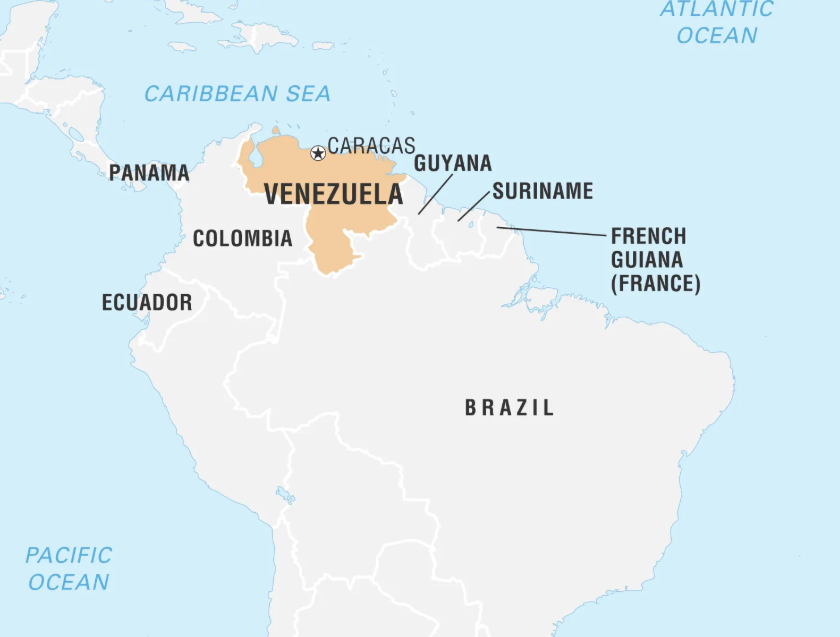
About Venezuela:
What it is?
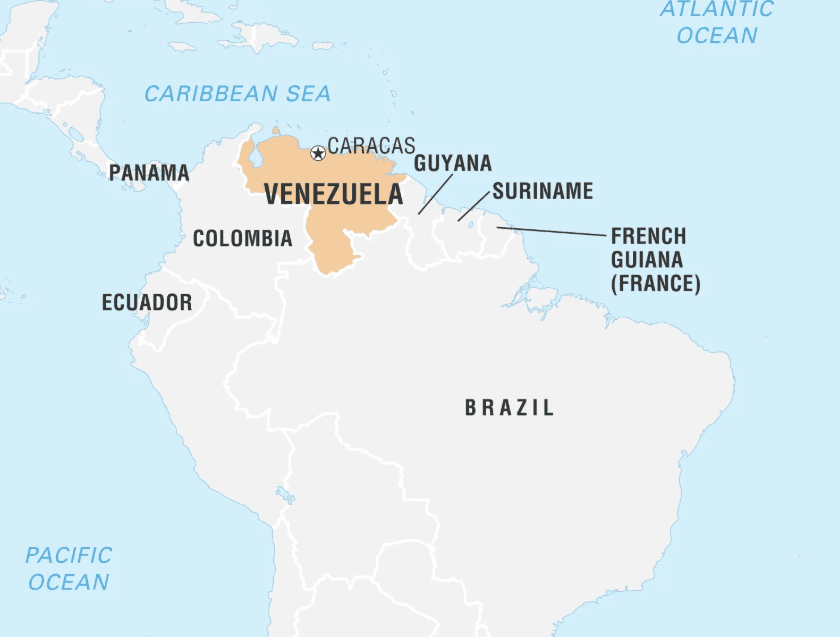
- A sovereign country occupying the northern extremity of South America, officially structured as a federal presidential republic with a unicameral legislature (the National Assembly).
Capital: Caracas.
Border Nations: Caribbean Sea, Guyana, Brazil, Colombia, and the Atlantic Ocean.
Key Features of Venezuela:
- World’s Largest Proven Oil Reserves: Venezuela possesses the world’s largest proven crude oil reserves, concentrated in the Orinoco Oil Belt and Lake Maracaibo Basin, underpinning its petroleum-dependent economy.
- Geographical Extremes and World Records: Home to Angel Falls (979 metres), the world’s highest uninterrupted waterfall, and Lake Maracaibo, one of South America’s largest natural water bodies.
- Ancient Tablelands of Guiana Highlands: The Guiana Shield features ancient flat-topped sandstone plateaus called tepuis, including Mount Roraima and Auyán-tepui, supporting unique endemic biodiversity.
- Casiquiare Natural Water Bifurcation: The Casiquiare Canal, a rare natural distributary of the Orinoco River, connects the Orinoco and Amazon basins through the Rio Negro.
- Llanos Grassland Ecosystem: The Llanos comprise extensive tropical savannas between the Andes and Orinoco, experiencing seasonal flooding and drought while supporting widespread cattle ranching.
Significance:
- Venezuela’s vast oil, natural gas, gold, iron ore and bauxite reserves make it strategically important for global energy security and mineral supply chains.
- Its location between the Caribbean and continental South America makes Venezuela significant for regional diplomacy, migration dynamics, trade and geopolitical stability.