Prelims
The 1945 Yalta Conference
Context: A reported November 19 trilateral summit between Trump, Putin and Xi Jinping on the sidelines of APEC in Shenzhen has drawn comparisons to the 1945 Yalta Conference.

About The 1945 Yalta Conference:
What it is?
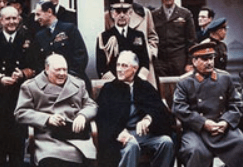
- A pivotal World War II wartime summit (also known as the Crimea Conference) held from February 4 to 11, 1945, where the three principal Allied leaders negotiated the final military defeat of Nazi Germany and laid out the geopolitical blueprint for the post-war international order.
Host & Location: Hosted by the Soviet Union at the Livadia Palace in the resort town of Yalta, located on the Crimean Peninsula.
Nations & Leaders Involved (“The Big Three”):
- United States: President Franklin D. Roosevelt
- United Kingdom: Prime Minister Winston Churchill
- Soviet Union (USSR): Premier Joseph Stalin
Aim: To coordinate Germany’s defeat and post-war reconstruction, secure Soviet entry into the war against Japan, and establish the framework for the United Nations.
Key Outcomes of the Yalta Conference:
- Division & Denazification of Germany: Agreed to divide Germany and Berlin into four Allied occupation zones (US, UK, USSR and France), ensuring demilitarization, denazification and prosecution of war criminals.
- Establishment of the United Nations: Finalized the UN framework, granting veto powers to five permanent Security Council members and separate General Assembly seats to Ukraine and Byelorussia.
- Soviet Entry into War Against Japan: Stalin agreed to join the Pacific War within 2–3 months of Germany’s surrender, securing concessions in Sakhalin, Kuril Islands and Manchuria.
- Declaration on Liberated Europe: Promised free elections and democratic reconstruction in liberated Europe while recognizing Soviet influence in Eastern Europe and Poland’s eastern boundary along the Curzon Line.
- German War Reparations: Established a Reparations Commission in Moscow to determine compensation from Germany through industrial equipment, labour and other resources for wartime destruction.
Significance:
- Soviet violations of free-election commitments in Eastern Europe and growing US–Soviet tensions contributed to the Cold War and Europe’s division behind the Iron Curtain.
- Yalta symbolizes major powers deciding smaller nations’ political and territorial futures, often without their consent, influencing contemporary debates on global power politics.