Prelims
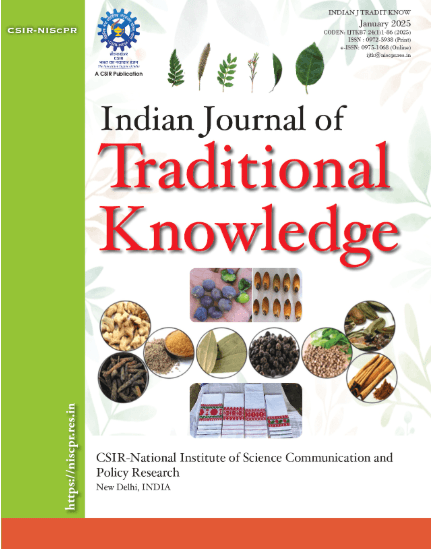
The Indian Journal of Traditional Knowledge (IJTK)
Context: CSIR-NIScPR concluded the International Conference on Traditional Knowledge (CDTK-2026), commemorating the 25th anniversary of the Indian Journal of Traditional Knowledge (IJTK).

About The Indian Journal of Traditional Knowledge (IJTK):
What it is?
- A premier peer-reviewed, diamond open-access quarterly interdisciplinary research journal dedicated to the systematic documentation, experimental investigation, and scientific validation of traditional knowledge systems, indigenous practices, and biological resources.
History:
- Conceived and launched in 2002 by the Council of Scientific and Industrial Research (CSIR) under erstwhile NISCAIR (now CSIR-NIScPR) to bridge traditional community wisdom with formal modern scientific inquiry.
- Reached its 25th year of continuous publication in 2026, evolving from an initial documentation vehicle into a globally indexed scientific journal covering ethnobotany, ethnomedicine, and reverse pharmacology.
Aim: To document, scientifically validate and preserve traditional knowledge in healthcare, biodiversity and rural technologies, integrating indigenous practices into evidence-based scientific research.
Key Features of IJTK:
- Comprehensive AYUSH & Ethno-Science Scope: Publishes research on AYUSH systems, ethnopharmacology, ethnobiology and traditional remedies, promoting scientific evaluation of indigenous medicinal practices.
- WIPO-PCT Minimum Documentation: Recognised under WIPO’s Patent Cooperation Treaty (PCT) Minimum Documentation, providing prior-art evidence to prevent biopiracy and wrongful patents on traditional knowledge.
- Global Indexing & Scholarly Recognition: Indexed in major databases, including Scopus, Science Citation Index Expanded and Journal Citation Reports, enhancing international visibility and research credibility.
- Diamond Open-Access Model: Provides free, unrestricted access to research articles without charging publication or submission fees, promoting equitable global knowledge dissemination.
- Peer Review & Research Ethics: Employs single-blind peer review and ethical safeguards, emphasising community consent, biodiversity benefit-sharing and scientific credibility in traditional knowledge research.
Significance:
- Complements India’s Traditional Knowledge Digital Library (TKDL) by documenting indigenous knowledge as prior art, preventing wrongful patents and commercial misappropriation.
- Supports reverse pharmacology and modern scientific validation of traditional remedies, facilitating affordable, standardised medicines and evidence-based pharmaceutical innovation.