Mapping
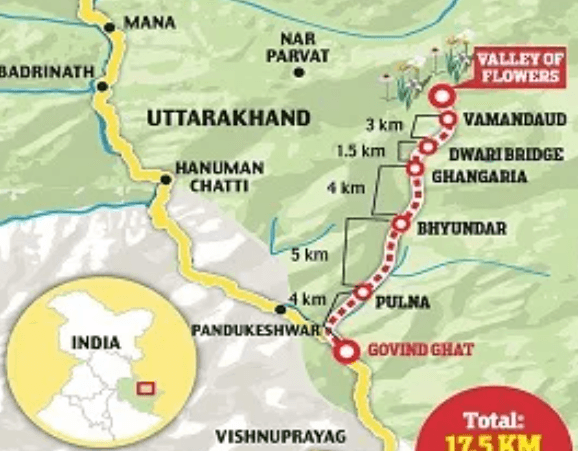
The Valley of Flowers
Context: Uttarakhand’s renowned Valley of Flowers National Park closed its gates for the winter, after welcoming a record-breaking 35,261 visitors during its five-month open season.

About The Valley of Flowers:
What it is?
- A high-altitude national park renowned for its vibrant endemic alpine floral meadows, glaciated valleys, and rich biodiversity, designated as a UNESCO World Heritage Site and forming one of the core zones of the Nanda Devi Biosphere Reserve.
Located in: Situated in the Chamoli district of Uttarakhand, nested in the upper reaches of the Bhyundar Valley (near Joshimath and Ghangaria) in the Western Himalayas at an average altitude of roughly 3,600 metres (up to 4,000+ metres) above mean sea level.
Background:
- Known locally as Bhyundar Ganga Valley and associated with Hindu folklore as the Gandhamardan mountain from where Lord Hanuman gathered the Sanjeevani herb.
- Accidentally discovered for the Western world in 1931 by British mountaineers Frank S. Smythe, Eric Shipton, and R.L. Holdsworth while returning from an expedition to Mount Kamet; Smythe later authored the celebrated book The Valley of Flowers.
- Declared a National Park in 1982, inscribed on the UNESCO World Heritage List in 2005 as an extension to the Nanda Devi National Park, and integrated into the UNESCO World Network of Biosphere Reserves.
Key Characteristics:
- Diverse Alpine & Sub-Alpine Flora: Spanning 87.5 sq. km, the valley supports over 500–600 flowering plant species, including Brahmakamal, blue poppies and primulas, alongside birch and rhododendron forests.
- High-Altitude Himalayan Fauna: Provides critical habitat for rare Himalayan wildlife, including snow leopards, musk deer, Asiatic black bears, red foxes and blue sheep (bharal).
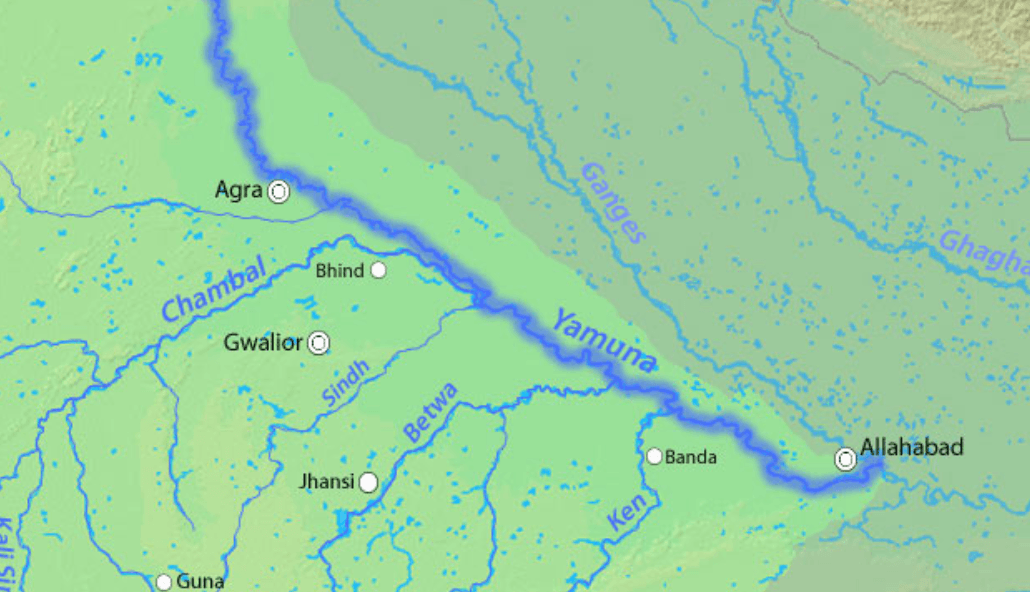
- Pushpawati River Catchment: The Pushpawati River, originating from Tipra Glacier, drains the valley and joins the Bhyundar Ganga near Ghangaria, eventually flowing into the Alaknanda River.
- Seasonal Accessibility: The valley remains accessible mainly from June to October, with peak flowering during the monsoon. Heavy snowfall restricts access during the remaining months.
Significance:
- Located between the Zanskar and Great Himalayan ranges, the valley supports a unique transition between alpine meadows and cold-desert ecosystems.
- Serves as a natural gene bank for rare alpine plants and medicinal herbs, including Aconitum heterophyllum, Dactylorhiza hatagirea and Picrorhiza kurroa.