Turning Climate Promises into Praxis
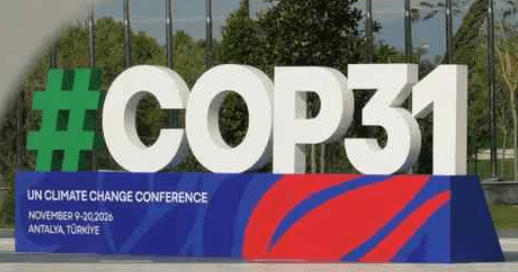
Context: Amid ongoing climate negotiations at COP31, policy analyses emphasize that global climate declarations—such as COP29’s $300 billion finance goal and COP31’s 35% global electrification target—must translate into ground-level execution (praxis).

About Turning Climate Promises into Praxis:
What It Is?
- Shifting international and national climate governance from aspirational pledges and installed-capacity announcements to timely, accessible financial disbursement, grid-level systemic integration, transparent progress tracking, and equitable socio-economic transitions for workers and communities.
Key Data & Stats:
- Global Climate Finance Targets (COP29): Pledged $300 billion per year to developing countries by 2035, alongside a broader goal of mobilizing $1.3 trillion annually from combined public and private sources.
- Global Electrification Goal (COP31): Aims to raise the share of electricity in total final energy consumption to 35% by 2035 across transport, buildings, and industry.
- India’s Surging Power Demand: According to the International Energy Agency (IEA), India’s electricity demand is projected to grow by approximately 6.4% annually over the next five years.
- India’s Non-Fossil Capacity Milestone: India achieved 300.5 GW of non-fossil electricity capacity by July 2026, crossing over 60% of its 500 GW target for 2030.
- Renewable Consumption Obligation (RCO): Mandates designated distribution licensees and large consumers in India to reach 43.33% renewable electricity consumption by 2029–30.
Need for Strong & Actionable Climate Commitments
- Preventing High-Carbon Infrastructure Lock-In: Rapidly industrializing nations with surging energy demand risk locking themselves into fossil-fuel pollution for decades unless clean power is deployed immediately at scale.
E.g., India needing to meet its 6.4% annual electricity demand growth through clean baseload and storage rather than building new coal-fired thermal plants.
- Bridging the Gap Between Installed Capacity and Reliable Generation: Adding solar and wind capacity alone does not guarantee uninterrupted power supply due to weather intermittency unless backed by transmission and storage networks.
E.g., Pairing India’s 300.5 GW non-fossil capacity with grid-scale battery storage, pumped hydro, and smart distribution lines to fulfill the 43.33% RCO mandate.
- Ensuring Grants and Non-Debt Finance Reach Vulnerable Communities: Developing countries require timely, grant-based, and concessional finance rather than expensive commercial loans that worsen debt distress.
E.g., Funding climate-resilient coastal defenses and rural flood protection where projects generate vital social security rather than direct commercial returns.
- Delivering a People-Centric Just Transition for Workers & MSMEs: Clean energy transitions must protect livelihoods in fossil-dependent regions and prevent clean-tech gains from concentrating solely among wealthy households and corporations.
E.g., Retraining coal-belt workers for solar and battery maintenance roles while providing affordable financing for small industries to adopt energy-efficient electric machinery.
- Guaranteeing Genuine Decarbonization Across End-Use Sectors: Electrifying transport and industry only cuts emissions if the underlying electricity grid is powered by clean energy rather than coal.
E.g., Ensuring electric buses and household EV charging stations draw power from renewable-integrated grids to achieve real pollution reduction under COP31’s 35% electrification goal.
Core Challenges in Operationalizing Climate Commitments
- Procedural Bottlenecks & Debt-Heavy Climate Finance: Complex approval processes delay project execution, while high-interest loans rather than grants or concessional capital risk saddling developing economies with unsustainable debt.
E.g., Vulnerable coastal and rural communities struggling to fund non-revenue-generating climate adaptation projects due to a lack of grant-based support.
- Grid Intermittency & Infrastructure Gaps: Installed renewable generation capacity does not automatically translate into reliable, dispatchable electricity without parallel investments in transmission and storage.
E.g., Solar and wind generation fluctuations requiring battery energy storage systems (BESS), pumped hydro storage, and smart distribution networks to prevent grid curtailment.
- Carbon Trap-Lock & Clean Charging Deficits: Electrifying end-use sectors yields limited climate gains if the underlying power grid remains heavily coal-dependent.
E.g., Electric buses and EVs reducing tailpipe urban pollution while still generating indirect emissions if charged predominantly from thermal power plants.
- Socio-Economic Vulnerability of Coal Regions & MSMEs: Rapid decarbonization threatens livelihoods in coal-bearing regions and risks excluding small enterprises and low-income households from green value chains.
E.g., Coal-mining workers facing displacement without structured reskilling, and MSMEs lacking affordable credit to upgrade to energy-efficient electric machinery.
Way Ahead: Making the Green Transition People-Centric
- Deliver Predictable, Blended Climate Finance: Combine grants for vulnerable adaptation projects with low-cost concessional loans and risk guarantees to unlock bankable clean-energy and public transit infrastructure.
- Invest in Full-System Grid Modernization: Expand high-voltage green energy corridors, utility-scale energy storage, and flexible grid management alongside generation capacity.
- Institutionalize a Just Transition for Workers & MSMEs: Co-design regional transition plans with coal-sector workers for retraining, while extending targeted credit, market access, and subsidies to MSMEs and low-income households for rooftop solar and EV adoption.
- Enforce Transparent Monitoring & Accountability: Track actual renewable electricity generation, finance delivery, and project timelines openly so citizens can evaluate policy outcomes and build public trust.
Conclusion:
The global climate crisis is no longer constrained by a lack of declarations, but by deficits in execution speed, affordable finance, and institutional follow-through. For India, meeting surging electricity demand while fulfilling its clean-energy mandates requires looking beyond generation headlines toward grid storage, worker reskilling, and equitable access for rural and small-business stakeholders. Turning climate promises into tangible praxis will ensure that decarbonization drives both environmental resilience and inclusive human development.
Evaluate the major challenges faced by small and medium enterprises in complying with emerging environmental standards in international markets? Suggest appropriate measures.