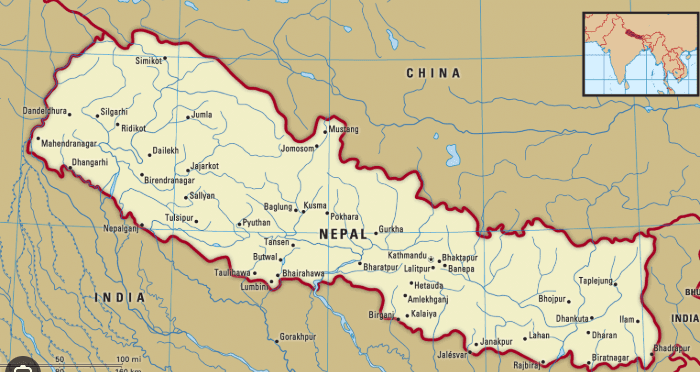
Mapping
Nepal
Context: Kathmandu is hosting Nepal’s first-ever Orchid Expo from November 18 to 20, 2026, at Park Village Resort in Budhanilkantha under the theme Orchids for Prosperity alongside the Fifth International Orchid Symposium.

About Nepal:
What it is:
- A landlocked sovereign Himalayan nation in South Asia, governed as a Federal Democratic Republic (since the abolition of its monarchy in 2008 and adoption of its secular constitution in 2015).
Capital: Kathmandu
Border Nations: Shares land borders with only two countries—China (Tibet Autonomous Region) and India.
Key Geographical Features of Nepal:
- Altitudinal & Geographic Diversity: Extends from 60 m in the Terai plains to Mount Everest (8,848.86 m), encompassing eight of the world’s 14 highest peaks.
- River Systems & Hydropower: The Koshi, Gandaki and Karnali river systems feed India’s Ganga basin, providing substantial freshwater resources and hydropower potential.
- Rich Biodiversity: Spans Indo-Malayan and Palearctic ecozones, supporting Bengal tigers, one-horned rhinoceroses, snow leopards and red pandas across diverse habitats.
- Cultural & UNESCO Heritage: Home to Lumbini, Buddha’s birthplace, and the culturally rich Kathmandu Valley, reflecting Nepal’s diverse Hindu-Buddhist traditions.
- Economic Significance: Depends primarily on overseas remittances, tourism and agriculture, alongside expanding hydropower exports to India and Bangladesh.
Nepal and Orchids:
- Hosts approximately 450–500+ wild orchid species across 100+ genera, with the Annapurna Conservation Area harbouring nearly 40% of Nepal’s orchid diversity.
- Over 100 native orchid species have traditional medicinal applications, while several others support ornamental floriculture, commercial cultivation and exports.
- Threatened by illegal harvesting and habitat loss, wild orchids receive CITES protection, highlighting the need for tissue culture and sustainable cultivation.