Rooppur Nuclear Power Plant
Context: Bangladesh connected its first nuclear facility, the Rooppur Nuclear Power Plant, to the national power grid on a trial basis, making it the 33rd country in the world to generate nuclear electricity.

About Rooppur Nuclear Power Plant:
What it is?
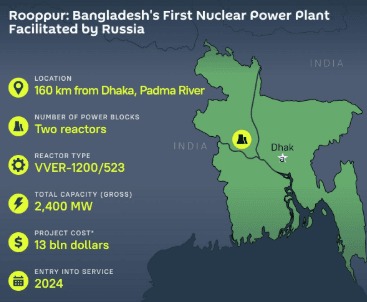
- Bangladesh’s maiden nuclear power project, featuring a total planned generation capacity of 2,400 MW across two nuclear reactor units, constructed following a bilateral intergovernmental agreement signed in 2015 (with construction commencing in 2017).
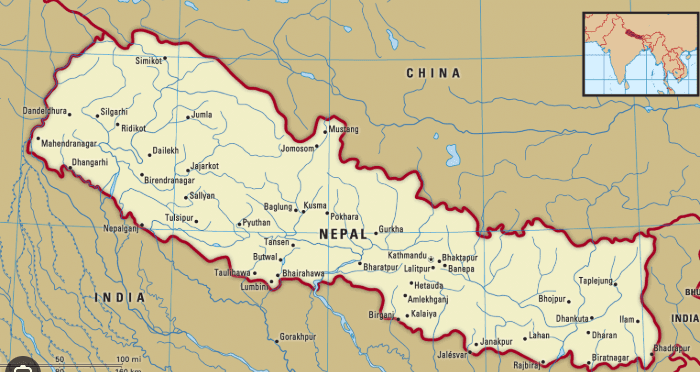
Located in: Situated at Rooppur in Ishwardi upazila of Pabna district in northwestern Bangladesh, along the eastern bank of the Padma River (roughly 160 km northwest of Dhaka).
Nations Involved: Bangladesh and Russia.
Aim: To diversify Bangladesh’s heavily gas and fossil-fuel-dependent energy mix, ensure reliable baseload electricity supply for its 170 million population, and meet over 10% of the nation’s total electricity demand once fully operational.
Key Features of Rooppur Nuclear Power Plant:
- Twin 1,200 MW VVER Reactors: Comprises two Generation III+ Russian pressurized water reactor units (VVER-1200), each capable of generating 1,200 MW of clean baseload power.
- Phased Grid Synchronization & Testing: Initiated grid integration with Unit-1 supplying 350 MW during an initial 8–10 hour window to test turbines, generators, and grid stability, followed by scheduled disconnections and reconnections during a mandatory 10-month trial period.
- Advanced Active & Passive Safety Systems: Equipped with Generation III+ safety mechanisms—including double-walled containment structures, passive heat removal systems, and core catchers—designed to withstand extreme natural disasters and external impacts.
- Strategic Riverine Cooling Infrastructure: Draws cooling water directly from the perennial Padma River, supported by dedicated river-training and water-management systems to maintain operational stability across seasons.
Significance:
- Provides stable, low-carbon electricity, reducing Bangladesh’s dependence on imported fuels amid West Asian conflicts and energy price shocks.
- Makes Bangladesh the 33rd nuclear power nation globally and third in South Asia, supporting decarbonisation, industrial growth and energy security.