The Battle For Responsible Microfinance
Context: The Reserve Bank of India (RBI) rejected microfinance industry demands to relax the 50% household repayment cap, reaffirming that responsible lending and explicit borrower consent must take precedence over aggressive loan expansion.

About The Battle For Responsible Microfinance:
What It Is?
- A specialized financial service model providing small-ticket, collateral-free credit, micro-savings, and micro-insurance to unbanked, under-banked, and low-income households—particularly rural women and informal micro-entrepreneurs—to support livelihoods and income smoothing.
Regulatory Classification (RBI 2022 Framework): Collateral-free loans extended to households with an annual income of up to ₹3 lakh, subject to a maximum monthly debt-repayment ceiling of 50% of monthly household income.
Key Data / Statistics on India’s Microfinance Sector:
- Portfolio Size & Reach: As of June 2026, the sector had 7.15 crore active loan accounts, 6.6 crore borrowers and an outstanding portfolio of ₹2.69–3.26 lakh crore.
- Disbursement Recovery: Loan disbursements grew 17% year-on-year to ₹62,302 crore during April–June 2026, signalling a gradual recovery after two years of contraction.
- Loan Delinquency: Early-stage delinquency (30–179 days) declined from 6.1% to 1.9%, while long-overdue loans (180+ days) remained high at 17.4%.
- Banks’ Participation: Commercial banks held ₹83,080 crore in microfinance loans, representing nearly 25% of the sector but less than 0.4% of total bank credit.
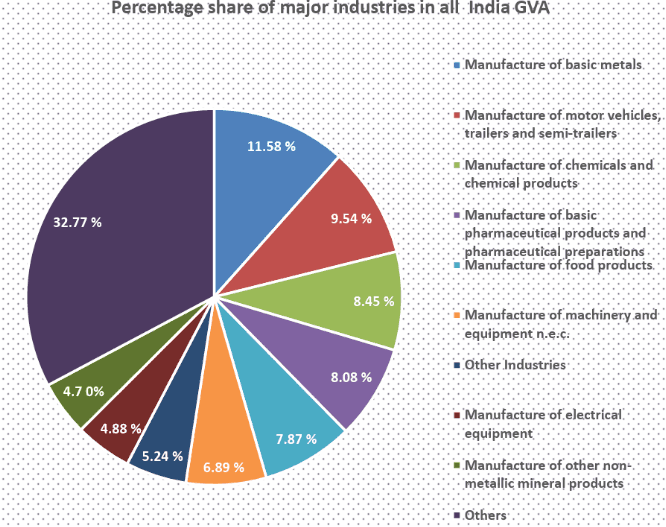
- Economic Contribution: Microfinance’s contribution to India’s GVA is projected to reach 2.7% by 2025–26, up from 2.03% in 2018–19.
Need for Regulating Microfinance:
- Preventing Household Over-Indebtedness & Debt Traps: Low-income borrowers lack financial buffers and spend nearly two-thirds of their income on basic consumption; unchecked multiple lending pushes vulnerable families into severe debt distress.
E.g., Elevated crude oil prices and essential food inflation squeezing rural disposable incomes, prompting borrowers to take new loans merely to repay existing EMIs.
- Curbing “Pseudo-Consent” & Predatory Cross-Selling: Borrowers with limited financial literacy often sign complex loan agreements without understanding effective interest rates or bundled third-party charges.
E.g., MFIs coercively bundling non-credit insurance or savings products alongside micro-loans to boost fee revenue without explicit borrower consent.
- Ensuring Fair Pricing & Transparency: Collateral-free lending carries higher operational costs, requiring regulatory guardrails so lenders do not impose usurious interest rates or hidden processing fees.
E.g., Lenders charging undisclosed processing fees or penal charges excluded from initial loan summaries.
- Containing Systemic Contagion & Coercive Recovery: Localized defaults or harsh recovery practices can trigger mass repayment boycotts, threatening the stability of small finance banks and NBFC-MFIs.
Challenges in Regulating Microfinance:
- Balancing Credit Discipline with Financial Inclusion: Overly rigid underwriting rules can inadvertently choke formal credit access for marginal borrowers, driving them back to informal moneylenders.
E.g., Industry bodies (MFIN) arguing that keeping the ₹3 lakh annual household income cap unchanged since 2022 excludes inflation-adjusted low-income earners from formal microcredit.
- Inaccurate Household Income & Liability Assessment: Informal rural incomes are seasonal and cash-based, making it difficult for field officers to verify true household cash flows and existing debt obligations.
E.g., Lenders pushing to exclude principal repayments from the 50% Fixed-Obligation-to-Income Ratio (FOIR) calculation, which the RBI rejected as understating actual debt burdens.
- Conflict of Interest in Self-Regulatory Organisations (SROs): Industry SROs face structural governance tensions when monitoring their own dues-paying member institutions.
E.g., RBI-recognised SROs like MFIN and Sa-Dhan functioning simultaneously as industry advocacy associations and compliance monitors.
- Digital & Interface Dark Patterns: As microfinance and retail lending digitize, deceptive user interfaces and rapid digital onboarding obscure loan terms for first-time borrowers.
Key Regulatory Guidelines Rolled Out by the RBI:
- 50% Household FOIR Cap & ₹3 Lakh Income Ceiling (2022 Master Directions): Mandates that total monthly loan repayments (both principal and interest across all active household loans) cannot exceed 50% of monthly household income for collateral-free microfinance loans (eligible up to ₹3 lakh annual income).
- Mandatory Key Facts Statement (KFS) & Cooling-Off Period: Requires all regulated lenders to issue a standardized, vernacular KFS displaying the all-inclusive Annual Percentage Rate (APR) and fees upfront, banning any undisclosed charges and providing a mandatory look-up/cooling-off period.
- High-Frequency Credit Bureau Reporting & Grameen Credit Score: Directs credit institutions to report borrower data to Credit Information Companies (CICs) at least four times a month (weekly) instead of fortnightly, while piloting the Grameen Credit Score for rural credit assessment.
- Responsible Business Conduct Directions: Prohibits compulsory bundling of third-party products, bans digital dark patterns, enforces explicit opt-in consent, and holds lenders strictly accountable for Direct Selling Agent (DSA) conduct and mis-selling compensation.
Way Ahead:
- Upgrade Rural Income & Cash-Flow Verification: Combine weekly credit bureau reporting with account-aggregator data and the Grameen Credit Score to accurately assess seasonal rural repayment capacity before relaxing income thresholds.
- Enforce Vernacular & Audio-Visual Consent Protocols: Supplement written Key Facts Statements with simple vernacular voice explanations and OTP-verified explicit opt-ins to eliminate pseudo-consent at the doorstep.
- Strengthen Independent Governance Within SROs: Ring-fence the supervisory and enforcement committees of SROs (MFIN and Sa-Dhan) with independent public-interest directors to prevent conflicts of interest.
- Shift Focus Toward Livelihood-Linked & Graduated Credit: Encourage MFIs to pair small-ticket consumption loans with productive enterprise financing, financial literacy training, and gradual transition into formal MSME banking channels.
- Strict Penalties for Mis-Selling & Coercive Recovery: Operationalize the January 2027 conduct rules with swift supervisory audits, mandatory full refunds for bundled mis-selling, and zero tolerance for harsh collection agents.
Conclusion:
The RBI’s firm stance underscores that sustainable financial inclusion cannot be built on aggressive loan growth that traps low-income households in unmanageable debt. By upholding the 50% repayment ceiling, mandating transparent Key Facts Statements, and outlawing coercive product bundling, the regulator is placing borrower protection at the center of microfinance. Achieving long-term sectoral stability will require lenders to strengthen ground-level income verification, uphold mindful consent, and align credit delivery with genuine household resilience.
“Microfinance began as an instrument of poverty alleviation, but commercialisation has altered its character”. Explain the core development philosophy of microfinance. Analyse how profit-driven lending has reshaped lender–borrower relations. Suggest regulatory measures to ensure socially responsible microfinance.