The Qeshm Island
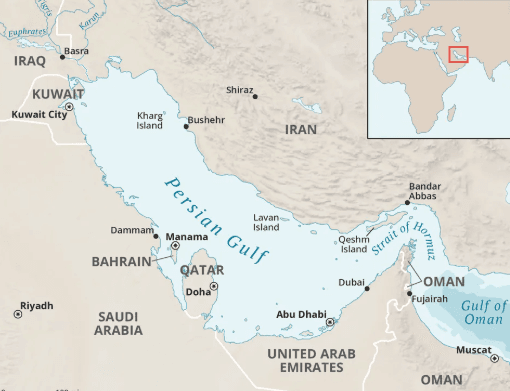
Context: The United States carried out targeted, defensive military strikes on Iran’s Qeshm Island in the Strait of Hormuz, aimed at neutralizing underground missile positions used to threaten commercial shipping lanes.

About The Qeshm Island:
What it is?
- The largest island in the Persian Gulf and an Iranian free-trade zone jurisdiction, serving as a critical commercial, ecological, and geostrategic military stronghold for the Islamic Revolutionary Guard Corps (IRGC).
Located in: Situated in the Strait of Hormuz off the southern coast of Iran (Hormozgan province), separated from mainland port cities Bandar Abbas and Bandar Khamir by the narrow Clarence Strait (Khuran Strait), lying approximately 60 km north of Oman’s Musandam peninsula.
Origin: Human habitation dates back to the Paleolithic era (Bam-e-Qeshm stone tools), with classical antiquity references identifying it as Aracia or Alexandria by Ptolemy, and Abarkawan during the Sasanian Empire.
Key Features of Qeshm Island:
- Geographic Extent: Spans approximately 1,491–1,500 sq. km, stretching 135 km in length, with Mount Bukhun (370 m) as its highest elevation.
- Underground Missile and Drone Facilities: Reportedly hosts fortified IRGC naval tunnels, accommodating anti-ship missiles, rockets, underwater drones and fast-attack vessels for coastal defence operations.
- Namakdan Salt Cave: Houses the 6.6-km-long Namakdan Salt Cave, a major geological attraction within the UNESCO-listed Qeshm Island Global Geopark, formed through ancient salt-dome processes.
- Harra Mangrove Forests: Supports extensive protected mangrove wetlands along its northwestern coast, providing important habitats for marine biodiversity and migratory birds.
- Strategic Khuran Strait Location: Borders the Khuran Strait, separating Qeshm from mainland Iran, providing a strategic position for monitoring maritime movements near the Strait of Hormuz.
Implications of the Strikes:
- Military escalation near the Strait of Hormuz, a major global oil transit route, raises concerns over shipping disruptions and crude oil price volatility.
- Strikes on missile facilities could weaken Iran’s anti-access/area-denial (A2/AD) capabilities, potentially limiting its ability to challenge naval and commercial shipping movements.
- Limited military strikes may seek to deter immediate threats without triggering wider conflict, although retaliatory actions could complicate regional security and diplomatic efforts.