Who Pays for Climate Change is a Federal Question?
Context: Recent climate-liability hearings in the US and the Sikkim High Court’s suo motu intervention have highlighted climate disaster financing and the imbalance between the Centre’s regulatory powers and States’ climate responsibilities.
About Who Pays for Climate Change is a Federal Question?
What It Is?
- A constitutional, legal, and fiscal debate within federal systems over how legislative authority, corporate polluter liability, and disaster-recovery financing are distributed between the national government and sub-national states when climate-induced catastrophes strike.
Key Data & Stats on Disaster Costs & Central Assistance
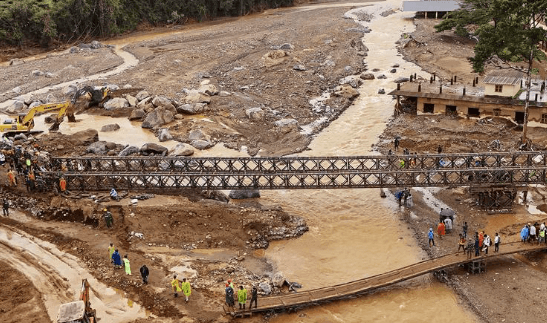
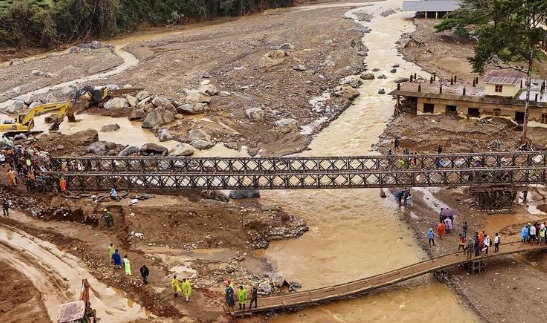
- Wayanad Landslides (July 2024, Kerala): Claimed 298 lives with 32 missing; the Union took nearly five months to declare it a disaster of severe nature and issued rehabilitation aid as a 50-year interest-free loan of ₹529.50 crore rather than a grant.
- Himachal Pradesh Floods (2023): Against State-estimated losses of ₹9,042 crore, the Union released ₹633.73 crore in immediate NDRF aid and sanctioned only ₹2,006.40 crore for recovery nearly two years later.
- Punjab Floods (August–September 2025): Against the State’s immediate relief demand of ₹20,000 crore, the Union government announced only ₹1,600 crore.
- Clean Environment Cess on Coal: Raised to ₹400 per tonne in 2016 and retained exclusively by the Union outside the divisible tax pool shared with States.
Constitutional & Fiscal Imbalances in India’s Climate Governance:
- Union Monopoly via Treaty Powers (Article 253): Empowers Parliament to legislate on State List subjects to implement international agreements, letting the Centre dominate environmental policy.
E.g., enacting the Air Act, 1981 and Environment (Protection) Act, 1986 after the 1972 Stockholm Conference, sidelining States.
- Centralized Disaster Architecture: Because disaster is absent from all three Lists of the Seventh Schedule, Parliament invoked Concurrent List entries to pass the Disaster Management Act, 2005—concentrating authority at the Centre while leaving first-responder costs to States.
E.g., States awaiting central severe nature categorization and Inter-Ministerial Central Team reviews before accessing supplementary funds.
- Exclusion of Green Cesses (Article 270): Under Article 270(1), Parliament retains cesses and surcharges entirely outside Finance Commission devolution.
E.g., ₹400/tonne coal cess revenues flowing solely to the Union while States bear local ecological and disaster burdens.
- Inadequate & Loan-Based Rehabilitation Aid: Central assistance covers a fraction of verified damage, arrives late, and increasingly substitutes loans for grants.
E.g., Kerala’s ₹529.50 crore 50-year loan and Himachal Pradesh waiting nearly two years for ₹2,006.40 crore against ₹9,042 crore in losses.
- Weak Corporate Polluter Liability: Despite statutory tribunal powers, major corporate emitters rarely face direct financial accountability for climate-linked disasters.
Evolving Judicial Interventions:
- M.C. Mehta vs. Union of India (1987): Established Absolute Liability, holding enterprises engaged in hazardous activities strictly liable for harm without exceptions.
- Vellore Citizens Welfare Forum vs. Union of India (1996): Embedded the Precautionary Principle and Polluter Pays Principle into Indian environmental jurisprudence.
- National Green Tribunal (NGT) Act, 2010: Created a specialized tribunal empowered to enforce environmental laws and award monetary restitution for ecological damage.
- M.K. Ranjitsinh vs. Union of India (2024): Recognized a fundamental right against the adverse effects of climate change under Articles 14 and 21, even without a standalone climate statute.
- Sikkim High Court Suo Motu PIL (September 2026): Initiated by Chief Justice A. Muhamed Mustaque following regional flash floods and the 2023 Teesta GLOF, urging district-level climate-risk assessments and anticipatory, participatory governance.
Way Ahead:
- Factor Climate Vulnerability into Devolution: Mandate the Finance Commission to include ecological fragility, disaster frequency, and adaptation costs in horizontal tax-sharing formulas.
- Share Fossil-Fuel & Green Levies: Bring environmental and carbon/coal levies into the divisible pool so fossil-fuel revenues directly fund State climate resilience.
- Replace Loans with Time-Bound Grants: Establish statutory timelines and objective triggers for releasing central rehabilitation aid as non-repayable grants rather than loans.
- Decentralize Climate Governance: Grant States legislative autonomy to enforce binding regional adaptation norms, polluter-pays penalties, and district-level risk assessments.
- Enforce Corporate Climate Accountability: Strengthen NGT and tort mechanisms to hold high-emission industries financially liable for localized climate-exacerbated damages.
Conclusion:
India’s centralized climate and fiscal framework places States on the frontlines of extreme weather without matching legislative power or funding. Rebalancing this asymmetry requires embedding climate risk into Finance Commission devolution, sharing green levies, and shifting from delayed loans to timely grants—advancing the anticipatory, decentralized model underscored by the Sikkim High Court.
What is meant by a just transition in the context of climate change? Explain the challenges involved in ensuring an equitable transition in India’s coal-dependent regions.